
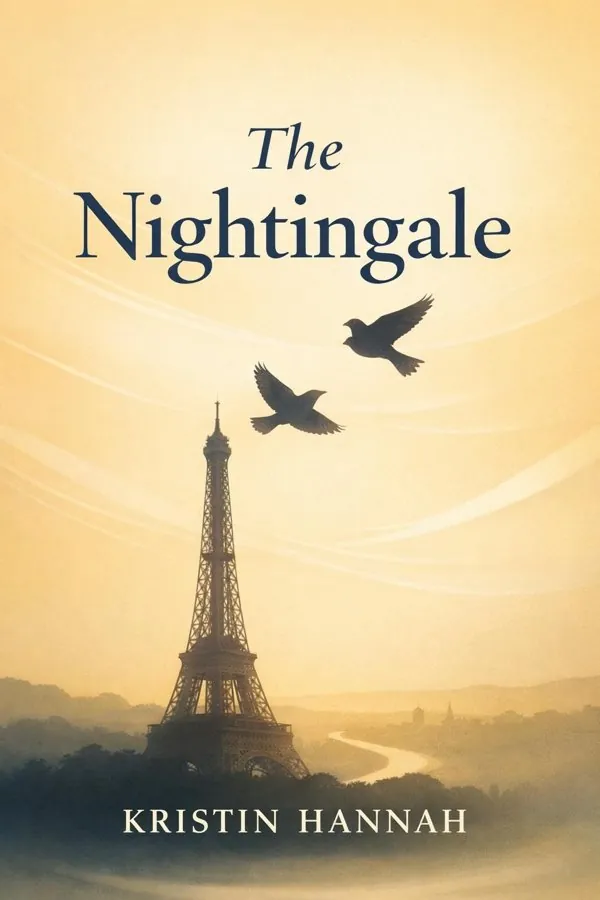
The Nightingale: Summary & Key Insights
 10 min5 chapters
About This Book
Set in France during World War II, this novel follows two sisters, Vianne and Isabelle, as they navigate love, survival, and resistance under Nazi occupation. The story explores the resilience of women and the human spirit in the face of unimaginable hardship.
The Nightingale
Set in France during World War II, this novel follows two sisters, Vianne and Isabelle, as they navigate love, survival, and resistance under Nazi occupation. The story explores the resilience of women and the human spirit in the face of unimaginable hardship.
Who Should Read The Nightingale?
This book is perfect for anyone interested in bestsellers and looking to gain actionable insights in a short read. Whether you're a student, professional, or lifelong learner, the key ideas from The Nightingale by Kristin Hannah will help you think differently.
- ✓Readers who enjoy bestsellers and want practical takeaways
- ✓Professionals looking to apply new ideas to their work and life
- ✓Anyone who wants the core insights of The Nightingale in just 10 minutes
Want the full summary?
Get instant access to this book summary and 500K+ more with Fizz Moment.
Get Free SummaryAvailable on App Store • Free to download
Key Chapters
The novel opens in 1995, far removed from the chaos of the 1940s. An elderly woman lives quietly in Oregon. She is surrounded by ordinary American comforts, yet within her mind, France still breathes—the villages, the occupied streets, the fear that once clung to every breath. This frame narrative is my way of reminding readers that history doesn’t stay buried; it echoes through decades, through generations. Her boxes packed with old papers are not just relics—they are vessels of truth waiting to be spoken.
In this beginning, I wanted to show how memory is both a burden and a liberation. War survivors often carry a silence so deep it becomes part of their skin. The elderly narrator’s choice to attend a ceremony in Paris reveals the tension between remembering and moving on. By allowing her to reflect from a distance, I created space to view the war not only as an event but as a lived, personal transformation. And thus, the story enters its true setting: France in 1939, when hope was still naive and fear merely a rumor.
Memory functions as the novel’s compass. It shapes identity and morality. Every act Vianne and Isabelle take will later become part of this echo, part of the woman’s fraught recollection. And when the reader ultimately discovers that she is Vianne, there is a sudden symmetry—the quiet sister is the one who tells the tale, ensuring that the voice of the brave, younger Nightingale lives on. Through remembrance, the silenced are finally heard.
In the summer of 1939, France still glowed under ordinary sun. Vianne Mauriac cherished the small rhythms of village life—her home in Carriveau, her husband Antoine, and their daughter Sophie. The world of war seemed impossibly distant. But when Antoine is mobilized, that gentle domesticity shatters. Overnight, Vianne’s existence narrows from days filled with family routines to survival under uncertainty. Her fear is not dramatic; it’s quiet, diffuse, and constant.
Isabelle Rossignol, her younger sister, stands as her opposite—a storm in human form. Expelled from yet another school, Isabelle’s defiance against authority mirrors the restless pulse of youth that refuses complacency. When she returns to Paris and later travels to Vianne’s village, we begin to witness the rich contrast between resignation and rebellion, fear and fury. I wanted their relationship to embody the soul of France itself—divided, wounded, yet still connected.
Through their clashes and misunderstandings, I explore the inheritance of trauma. Their mother’s death and father’s emotional absence forged two different survival strategies: Vianne hides from pain, Isabelle confronts it. Both seek meaning in a world spinning apart. When the German occupation begins, their differing views of morality and courage are tested under the harshest light. Yet beneath all their conflict lies love—the inescapable pull of family that endures even when words fail.
This chapter of their lives is where the true moral tension begins. Vianne’s house becomes not just shelter but stage, where compassion must wear a mask. Isabelle’s choice to defy becomes not just rebellion but calling. Through both, I portray the vast spectrum of female strength—one rooted in care, the other in conviction.
+ 3 more chapters — available in the FizzRead app
All Chapters in The Nightingale
About the Author
Kristin Hannah is an American author known for her emotionally powerful novels that often explore family, love, and resilience. Her works, including 'The Nightingale' and 'The Great Alone', have been bestsellers and translated into numerous languages.
Get This Summary in Your Preferred Format
Read or listen to the The Nightingale summary by Kristin Hannah anytime, anywhere. FizzRead offers multiple formats so you can learn on your terms — all free.
Available formats: App · Audio · PDF · EPUB — All included free with FizzRead
Download The Nightingale PDF and EPUB Summary
Key Quotes from The Nightingale
“The novel opens in 1995, far removed from the chaos of the 1940s.”
“In the summer of 1939, France still glowed under ordinary sun.”
Frequently Asked Questions about The Nightingale
Set in France during World War II, this novel follows two sisters, Vianne and Isabelle, as they navigate love, survival, and resistance under Nazi occupation. The story explores the resilience of women and the human spirit in the face of unimaginable hardship.
More by Kristin Hannah

You Might Also Like

Ready to read The Nightingale?
Get the full summary and 500K+ more books with Fizz Moment.