
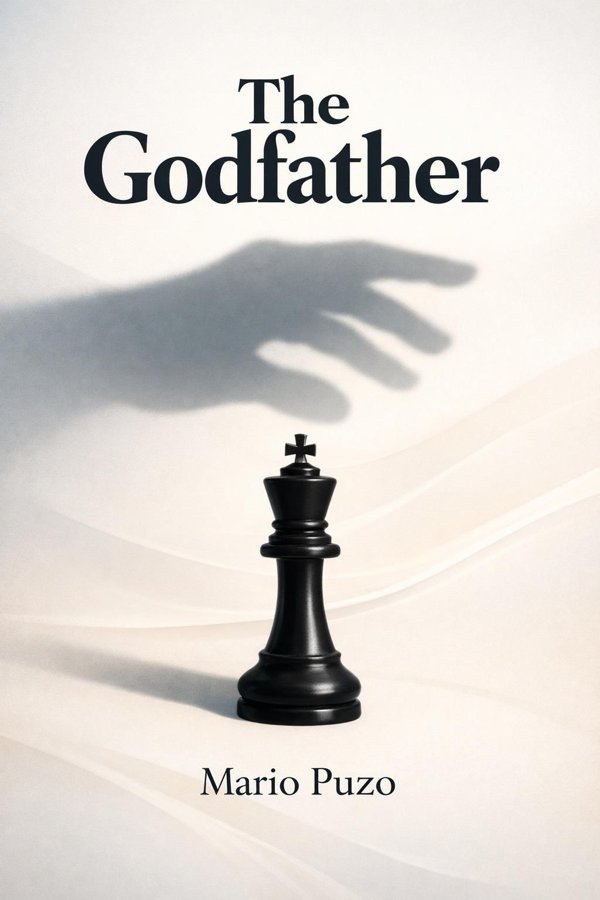
The Godfather: Summary & Key Insights
by Mario Puzo
 10 min8 chapters
About This Book
The Godfather is a crime novel by Italian American author Mario Puzo, first published in 1969. It chronicles the powerful Italian-American crime family of Don Vito Corleone, exploring themes of power, loyalty, and corruption within organized crime. The novel became a cultural phenomenon and inspired the acclaimed film series directed by Francis Ford Coppola.
The Godfather
The Godfather is a crime novel by Italian American author Mario Puzo, first published in 1969. It chronicles the powerful Italian-American crime family of Don Vito Corleone, exploring themes of power, loyalty, and corruption within organized crime. The novel became a cultural phenomenon and inspired the acclaimed film series directed by Francis Ford Coppola.
Who Should Read The Godfather?
This book is perfect for anyone interested in bestsellers and looking to gain actionable insights in a short read. Whether you're a student, professional, or lifelong learner, the key ideas from The Godfather by Mario Puzo will help you think differently.
- ✓Readers who enjoy bestsellers and want practical takeaways
- ✓Professionals looking to apply new ideas to their work and life
- ✓Anyone who wants the core insights of The Godfather in just 10 minutes
Want the full summary?
Get instant access to this book summary and 500K+ more with Fizz Moment.
Get Free SummaryAvailable on App Store • Free to download
Key Chapters
At the heart of New York’s underworld stands Don Vito Corleone, a man whose influence reaches beyond crime into the moral fabric of society. He is not merely a mob boss; he is a patriarch, a statesman, a dispenser of justice in a world where the official system fails. His power does not come from guns alone—it comes from respect, from the loyalty he commands through compassion and fairness.
In introducing Don Vito, I wanted readers to see a man who carries his authority with calm restraint. His home, where supplicants arrive seeking favors, symbolizes an alternate form of governance. Each request tests his wisdom and his boundaries. He grants justice softly, not as vengeance, but as equilibrium restored. To those around him, he is both father and god, embodying the paradox that love and crime can coexist under the same roof.
Through Don Vito, you encounter an idea central to the novel: that absolute power requires absolute responsibility. The crime family mirrors traditional society—it has its own laws, ethics, and diplomacy. When you enter the Corleone world, you see that corruption is never one-sided; it exists between ambition and survival, desire and duty. Don Vito’s empire represents both order and decay—a structure that can protect or destroy depending on who leads it.
The story begins amid joy, music, and tradition at Connie Corleone’s wedding. Yet behind the laughter and Sicilian rituals lies an intricate web of alliance. The wedding scene establishes everything you need to know about this world: family traditions forge unity, but business never sleeps. Guests move among musicians and food, yet every conversation carries hidden transactions. It is a portrait of celebration and negotiation intertwined, revealing the sacrosanct link between family loyalty and enterprise.
For Don Vito, such gatherings are opportunities to reaffirm his code: friendship and honor in exchange for mutual respect. You see how power operates quietly—through gestures, favors, and whispered promises. Every visitor who approaches the Don does so with reverence. In granting wishes to others, he fortifies his own dominion.
At this wedding, the balance between private joy and public influence is clear. It is here Johnny Fontane, the famous singer and godson of Don Vito, requests help in Hollywood—a moment that demonstrates how far the Corleone reach extends. The scene teaches that family ritual is also political theater; beneath emotional warmth lies calculated governance.
+ 6 more chapters — available in the FizzRead app
All Chapters in The Godfather
About the Author
Mario Puzo (1920–1999) was an American author and screenwriter, best known for his novels about the Mafia, particularly The Godfather. Born in New York City to Italian immigrant parents, Puzo also co-wrote the screenplays for the film adaptations of The Godfather trilogy, earning two Academy Awards for Best Adapted Screenplay.
Get This Summary in Your Preferred Format
Read or listen to the The Godfather summary by Mario Puzo anytime, anywhere. FizzRead offers multiple formats so you can learn on your terms — all free.
Available formats: App · Audio · PDF · EPUB — All included free with FizzRead
Download The Godfather PDF and EPUB Summary
Key Quotes from The Godfather
“At the heart of New York’s underworld stands Don Vito Corleone, a man whose influence reaches beyond crime into the moral fabric of society.”
“The story begins amid joy, music, and tradition at Connie Corleone’s wedding.”
Frequently Asked Questions about The Godfather
The Godfather is a crime novel by Italian American author Mario Puzo, first published in 1969. It chronicles the powerful Italian-American crime family of Don Vito Corleone, exploring themes of power, loyalty, and corruption within organized crime. The novel became a cultural phenomenon and inspired the acclaimed film series directed by Francis Ford Coppola.
You Might Also Like

Ready to read The Godfather?
Get the full summary and 500K+ more books with Fizz Moment.