
Tim Ferriss's Toolkit: Books for Peak Performance
Tim Ferriss has interviewed hundreds of world-class performers on his podcast, and these are the books that come up again and again. From Stoic philosophy to power dynamics, this list is a toolkit for optimizing your life.

 10 min read
Meditations
by Marcus Aurelius
What does it mean to stay calm, just, and fully human in a world full of pressure, conflict, ego, and loss? That is the enduring question at the heart of Meditations, the private journal of Roman emperor Marcus Aurelius. Written in Greek and never intended for publication, these reflections are not polished philosophy lectures. They are personal reminders from one of the most powerful men in the world trying to govern not only an empire, but also his own mind. That tension is exactly why this book still matters. Meditations remains one of the clearest guides to Stoic philosophy because it speaks directly to everyday struggles: dealing with difficult people, accepting change, resisting vanity, and acting with integrity when no one is watching. Marcus Aurelius is remembered as both a Roman emperor and a Stoic philosopher, a rare figure often described as a philosopher-king. His reflections on virtue, discipline, mortality, and inner peace have influenced readers for centuries. If you want practical wisdom rather than abstract theory, Meditations offers a deeply human blueprint for living with clarity, resilience, and moral purpose.
Key Takeaways
- 1Book I: Lessons from Those Who Shaped Me — The opening book of Meditations is an extraordinary act of gratitude. Instead of launching into abstract arguments, Marc…
- 2Book II: Accepting Fate and Living Rationally — Book II opens with one of the most quoted passages in Stoic philosophy: a morning reminder that we will meet interfering…
- 3Book III: Integrity Beyond Fame — In Book III, Marcus Aurelius turns his attention to time, mortality, and the danger of living for approval. He reminds h…
 10 min read
48 Laws of Power
by Robert Greene
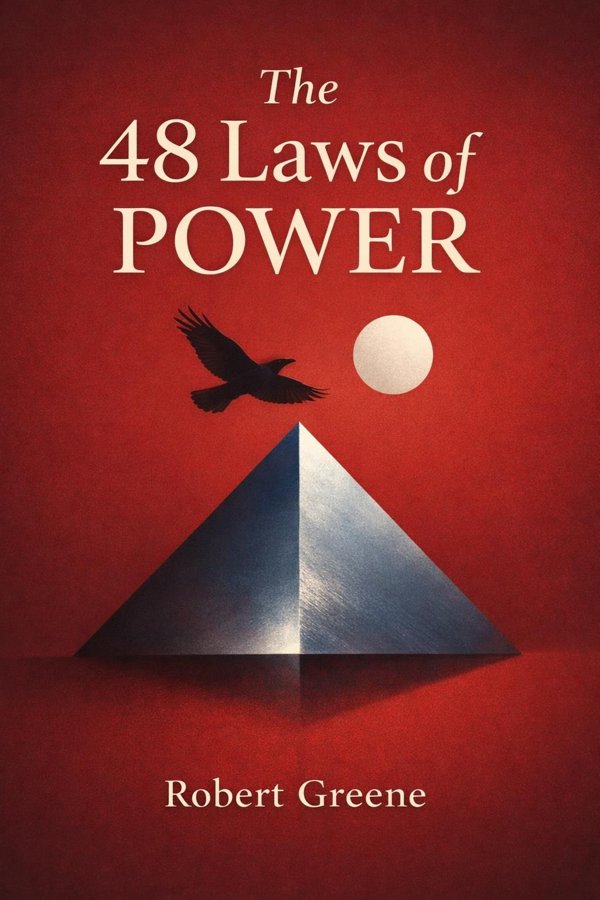
The 48 Laws of Power is a modern classic on strategy, influence, and human behavior. Drawing from historical examples of powerful figures such as Machiavelli, Sun Tzu, and various political leaders, Robert Greene distills centuries of wisdom into 48 concise laws designed to help readers understand and navigate the dynamics of power in social, professional, and political contexts.
Key Takeaways
- 1Law 1–5: Foundations of Power—Perception, Discretion, and Strategic Humility — Power begins with awareness. To act effectively, you must first understand how others perceive you. Many destroy their o…
- 2Law 6–10: Capturing Attention and Building Reputation — Power cannot thrive in obscurity. Visibility is the oxygen of influence, but it must be managed like a flame—never too b…
- 3Law 11–15: Relationships, Independence, and Strategic Absence
 10 min read
Tao Te Ching
by Lao Tzu
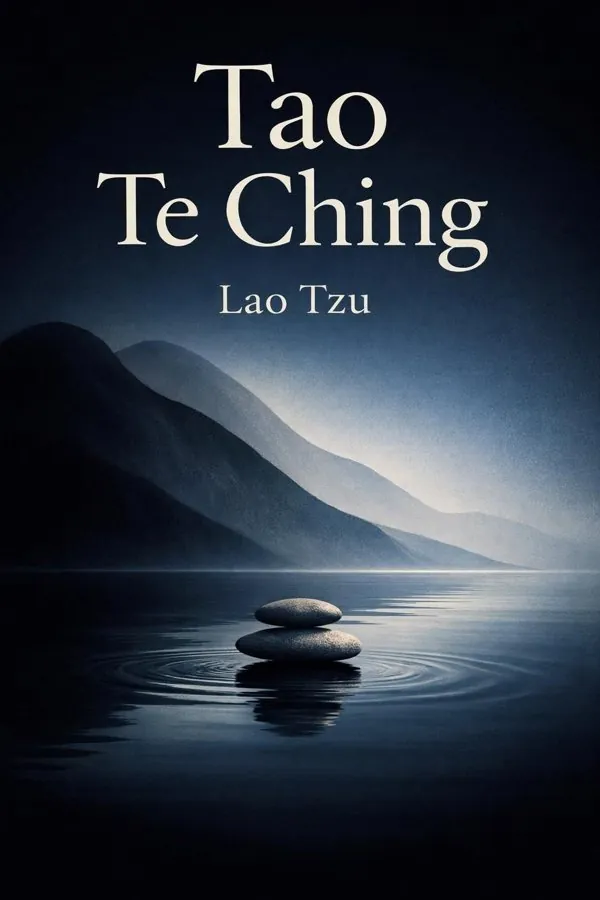
Few books have shaped spiritual thought, leadership, and personal reflection as deeply as the Tao Te Ching. Though brief in length, this ancient classic opens a surprisingly vast way of seeing life: one that values stillness over strain, humility over ego, and alignment over force. At a time when modern life often rewards speed, control, and constant self-assertion, the Tao Te Ching offers a radically different path. It suggests that the most effective way to live is not by pushing harder, but by moving in harmony with the deeper patterns of existence. Attributed to Lao Tzu, the revered sage traditionally associated with the founding of Daoism, this text has endured for more than two millennia because it speaks to timeless human struggles: how to lead without dominating, act without exhausting yourself, and find peace in a world of change. Divided into reflections on the Tao, or the Way, and Te, often translated as virtue or inner power, the book blends poetic paradox with practical wisdom. Its teachings on non-action, simplicity, and natural balance continue to influence philosophy, politics, spirituality, and self-development around the world.
Key Takeaways
- 1Introduction to the Tao — The Tao is the starting point of the entire book, yet Lao Tzu immediately tells us it cannot be fully captured in langua…
- 2The Nature of the Tao — Lao Tzu describes the Tao through paradox because ordinary logic cannot contain it. It is empty, yet never used up. It i…
- 3Wu Wei (Non-Action) — Wu wei is one of the most misunderstood ideas in the Tao Te Ching. It does not mean laziness, passivity, or refusing to …
 10 min read
Man's Search for Meaning
by Viktor Frankl
What keeps a person going when everything familiar has been taken away—comfort, identity, loved ones, freedom, and even the expectation of tomorrow? That is the unbearable and essential question at the heart of *Man's Search for Meaning*. Viktor E. Frankl’s landmark book is far more than a Holocaust memoir. It is a profound study of human endurance, an examination of suffering, and a practical philosophy for anyone trying to live with purpose in hard times. Drawing on his experiences in Nazi concentration camps, Frankl explores how people respond when life is reduced to its barest terms and why some still manage to preserve dignity, hope, and inner freedom. What makes this book endure is that Frankl does not offer empty inspiration. He writes as an Austrian neurologist, psychiatrist, and Holocaust survivor who later developed logotherapy, a school of psychotherapy centered on meaning as the primary human motivation. His insight is simple but life-changing: even when we cannot change our circumstances, we can still choose our response. That idea has made this book one of the most influential works in psychology and self-help, especially for readers facing grief, burnout, uncertainty, or the quiet fear that life has lost direction.
Key Takeaways
- 1The Shock of Arrival and the Dehumanization of Camp Life — When Frankl first arrived at Auschwitz, the destruction of the self began immediately. The process was systematic: priso…
- 2Emotional Detachment and the Apathy that Defines Survival — After the first shock came a second psychological stage: apathy. Frankl shows that this numbness was not indifference in…
- 3Moral Choice and Inner Freedom in the Midst of Suffering — One of the book’s most powerful claims is that even under extreme oppression, a human being retains a final freedom: the…
 10 min read
Sapiens
by Yuval Noah Harari
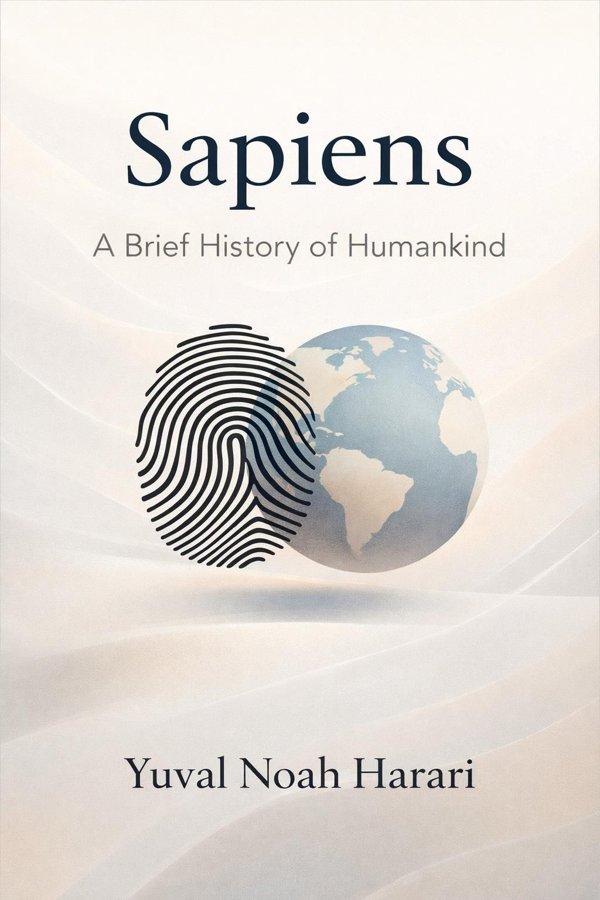
Sapiens: A Brief History of Humankind is a historical essay that explores the evolution of the human species from the earliest Homo sapiens to the modern era. Yuval Noah Harari examines how biology, anthropology, and economics have shaped human societies, highlighting three major revolutions: the cognitive, the agricultural, and the scientific. The book offers a panoramic view of how ideas, myths, and social structures have enabled humans to dominate the planet.
Key Takeaways
- 1The Cognitive Revolution: The birth of imagination — About seventy thousand years ago, something extraordinary happened. Our ancestors, who had lived much like other animals…
- 2The Agricultural Revolution: The trap of progress — Around ten thousand years ago, humans began to cultivate crops and domesticate animals, converting from nomadic foragers…
 10 min read
Influence
by Robert Cialdini
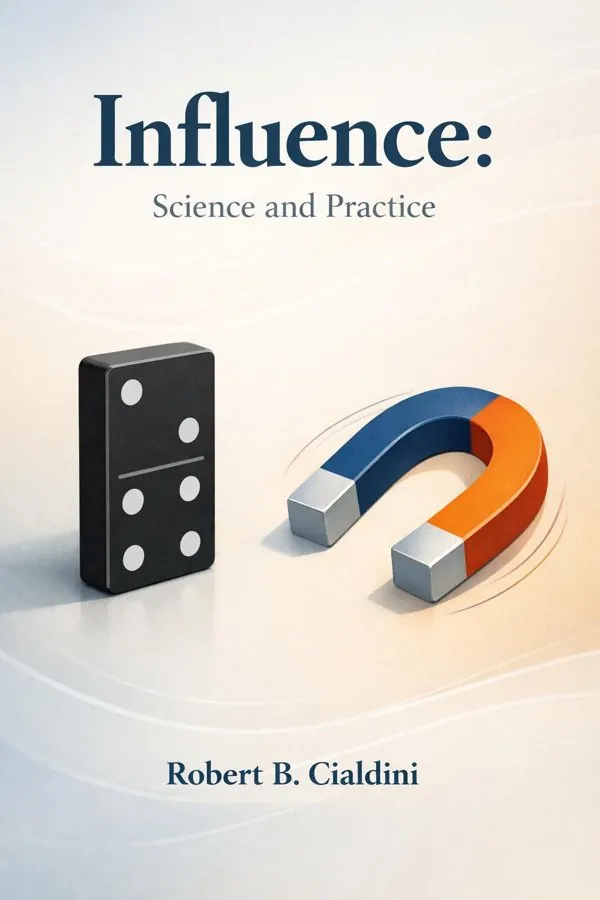
This book explores the psychology of persuasion and the mechanisms that drive people to say 'yes'. Robert B. Cialdini, a renowned social psychologist, presents six universal principles of influence—reciprocity, commitment and consistency, social proof, authority, liking, and scarcity—supported by decades of empirical research. It is widely used in marketing, negotiation, and behavioral science to understand and ethically apply persuasive techniques.
Key Takeaways
- 1Weapons of Influence — Before examining each principle individually, we must understand the nature of automatic influence. Humans, like other a…
- 2Reciprocity — One of the oldest and most pervasive rules of human conduct is the rule of reciprocity. Across cultures and throughout h…
- 3Commitment and Consistency
 10 min read
Poor Charlie"s Almanack
by Charles T. Munger
Poor Charlie’s Almanack is a collection of speeches, essays, and commentary by Charles T. Munger, vice chairman of Berkshire Hathaway. Edited by Peter D. Kaufman, the book presents Munger’s insights on investing, decision-making, human psychology, and life philosophy, emphasizing multidisciplinary thinking and rationality. It serves as both a biography and a compendium of Munger’s intellectual framework, reflecting his humor and wisdom.
Key Takeaways
- 1The Psychology of Human Misjudgment — When I delivered the talk called “The Psychology of Human Misjudgment,” my goal was simple: to make intelligent people a…
- 2The Importance of Mental Models — A man with a single lens sees one world; a man with many lenses sees reality. My argument for mental models has always b…
- 3Worldly Wisdom and Multidisciplinary Learning
 10 min read
The 4-Hour Workweek
by Tim Ferriss
The 4-Hour Chef is a guide to accelerated learning disguised as a cookbook. Timothy Ferriss uses cooking as a framework to teach readers how to master any skill quickly and efficiently. The book combines recipes, techniques, and meta-learning principles, showing how to deconstruct complex skills, practice effectively, and achieve mastery in less time.
Key Takeaways
- 1Meta-Learning (The Domestic) — The core of *The 4-Hour Chef* is meta-learning—the ability to learn how to learn. Cooking becomes the stage on which thi…
- 2The Wild — In The Wild section, I move from the comfort of the kitchen to the unpredictability of the outdoors. Mastery without ada…
- 3The Scientist
 10 min read
Siddhartha
by Hermann Hesse
Siddhartha is a 1922 novel by Hermann Hesse that follows the spiritual journey of a young man named Siddhartha during the time of the Buddha. Seeking enlightenment, Siddhartha explores asceticism, sensuality, and self-discovery, ultimately realizing the unity of all existence. The book is celebrated for its profound philosophical insights and its synthesis of Eastern and Western thought.
Key Takeaways
- 1The Dissatisfied Brahmin — I first met Siddhartha as a radiant young man, a Brahmin’s son whose life seemed already blessed. He was admired for his…
- 2Life with the Samanas and the Encounter with the Buddha — Life among the Samanas taught Siddhartha self-denial, but also the limits of renunciation. Under the harsh sun, he learn…
- 3The Worldly Years: Kamala and Kamaswami
Want the full summary?
Get instant access to this book summary and 500K+ more with Fizz Moment.
Get Free SummaryAvailable on App Store • Free to download
About This List
Tim Ferriss has interviewed hundreds of world-class performers on his podcast, and these are the books that come up again and again. From Stoic philosophy to power dynamics, this list is a toolkit for optimizing your life.
This list features 9 carefully selected books. With FizzRead, you can read AI-powered summaries of each book in just 15 minutes. Get the key takeaways and start applying the insights immediately.
Ready to start reading?
Get instant access to all 9 book summaries and 500K+ more with FizzRead.