
Neil deGrasse Tyson's Science Bookshelf
Books recommended by astrophysicist Neil deGrasse Tyson for understanding the universe and our place in it.

 10 min read
Sapiens
by Yuval Noah Harari
Sapiens: A Brief History of Humankind is a historical essay that explores the evolution of the human species from the earliest Homo sapiens to the modern era. Yuval Noah Harari examines how biology, anthropology, and economics have shaped human societies, highlighting three major revolutions: the cognitive, the agricultural, and the scientific. The book offers a panoramic view of how ideas, myths, and social structures have enabled humans to dominate the planet.
Key Takeaways
- 1The Cognitive Revolution: The birth of imagination — About seventy thousand years ago, something extraordinary happened. Our ancestors, who had lived much like other animals…
- 2The Agricultural Revolution: The trap of progress — Around ten thousand years ago, humans began to cultivate crops and domesticate animals, converting from nomadic foragers…
 10 min read
A Short History of Nearly Everything
by Bill Bryson
A Short History of Nearly Everything is a popular science book by Bill Bryson that explores the history of scientific discovery and the development of our understanding of the universe, Earth, and life itself. Bryson presents complex scientific concepts in an accessible and humorous way, covering topics from cosmology and geology to biology and physics, while highlighting the human stories behind major scientific breakthroughs.
Key Takeaways
- 1Origins of the Universe — The story begins with nothing—or rather, with everything compressed into a point smaller than a particle. From this unim…
- 2Formation of Earth — The Earth formed around 4.5 billion years ago, when stray dust and gas swirling around a young star began to coalesce. T…
- 3Geological Time and Earth’s Age
 10 min read
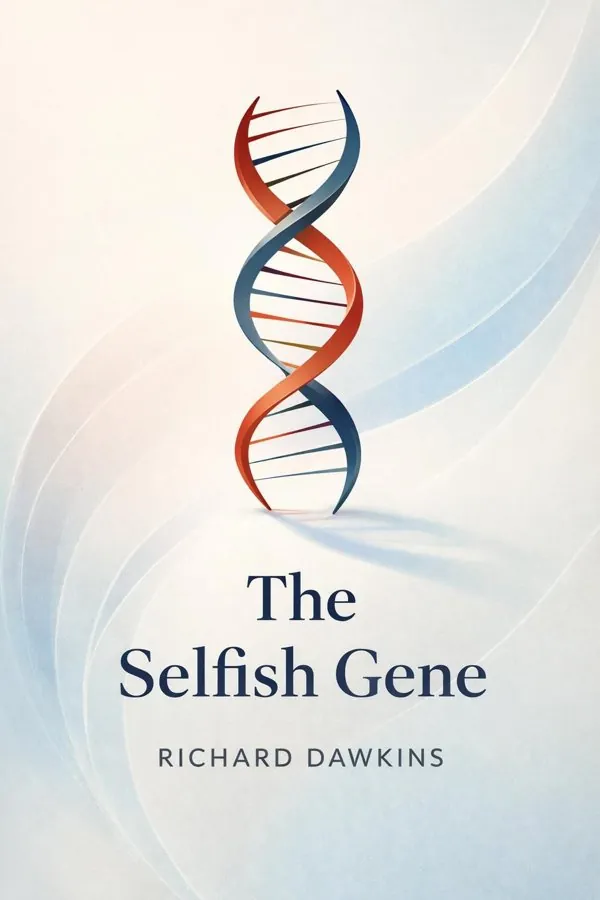
The Selfish Gene
by Richard Dawkins
The Selfish Gene is a groundbreaking work of evolutionary biology that popularized the gene-centered view of evolution. Richard Dawkins argues that natural selection acts primarily at the level of genes, which behave as if they are 'selfish' in their drive to replicate. The book introduces key concepts such as the replicator, the meme, and the idea that altruistic behavior can arise from the self-interest of genes. It reshaped public understanding of evolution and influenced fields from biology to psychology and philosophy.
Key Takeaways
- 1The Gene-Centered View of Evolution — At the core of my argument lies a simple yet revolutionary shift: natural selection acts not primarily on organisms or g…
- 2Replicators and Vehicles — To understand evolution properly, it is essential to separate replicators—the informational molecules that persist—from …
- 3Altruism and Inclusive Fitness
 10 min read
Guns Germs and Steel
by Jared Diamond
Why did some societies develop writing, steel weapons, large empires, and ocean-crossing ships, while others did not? That deceptively simple question sits at the center of Guns, Germs, and Steel, one of the most influential history books of the modern era. In this sweeping work, Jared Diamond challenges the comforting but dangerous idea that global inequality can be explained by differences in intelligence, culture, or race. Instead, he argues that the deepest causes of historical dominance were geographical and ecological: access to domesticable crops and animals, the spread of disease, the shape of continents, and the ability of ideas to travel. What makes this book matter is not just its bold thesis, but its scale. Diamond connects anthropology, geography, biology, and history into one big explanation for how the modern world took shape. He asks readers to zoom out from kings and battles and look instead at seeds, livestock, climate, and migration routes. Diamond, a geographer and historian at UCLA and Pulitzer Prize winner for this book, brings unusual interdisciplinary authority to the subject. The result is a provocative, readable framework for understanding why power accumulated unevenly across the globe—and why that history still matters today.
Key Takeaways
- 1Yali’s Question — The book begins with a question that is both personal and world-historical. In New Guinea, a local leader named Yali ask…
- 2Natural Experiments of History — To test his theory, Diamond looks for what he calls “natural experiments of history”—cases where related peoples ended u…
- 3The Evolution of Human Societies — Diamond places human history on a very long timeline. For most of our species’ existence, humans lived as hunter-gathere…
 10 min read
The Demon-Haunted World
by Carl Sagan
In this influential work, Carl Sagan passionately defends the scientific method and rational inquiry against superstition, pseudoscience, and irrational beliefs. Through engaging examples and lucid explanations, Sagan explores how science empowers humanity to understand the universe and protect itself from deception. The book serves as both a celebration of scientific thinking and a warning against the dangers of ignorance and credulity.
Key Takeaways
- 1The Nature of Science — Science begins not with certainty but with doubt. This is perhaps the most misunderstood aspect of the scientific spirit…
- 2The Baloney Detection Kit — Many years of exposure to extraordinary claims—from UFO abductions to psychic healers—prompted me to develop what I lovi…
- 3Pseudoscience and Superstition
 10 min read
Surely You're Joking, Mr. Feynman!
by Richard P. Feynman
A collection of autobiographical stories by Nobel Prize–winning physicist Richard P. Feynman, recounting his adventures inside and outside the world of science. The book captures his curiosity, humor, and unconventional approach to life, from his work on the Manhattan Project to his fascination with safecracking and art.
Key Takeaways
- 1The Joy of Learning: Early Curiosity and My Father’s Influence — It all began in Far Rockaway, New York, long before anyone knew the name Feynman. My father, Melville, didn’t have a sci…
- 2Becoming a Physicist: Finding My Way at MIT and Princeton — At MIT, I finally found a place where curiosity wasn’t strange behavior. I majored in physics not because I planned to, …
- 3Los Alamos: Science, Secrecy, and Safecracking
 10 min read
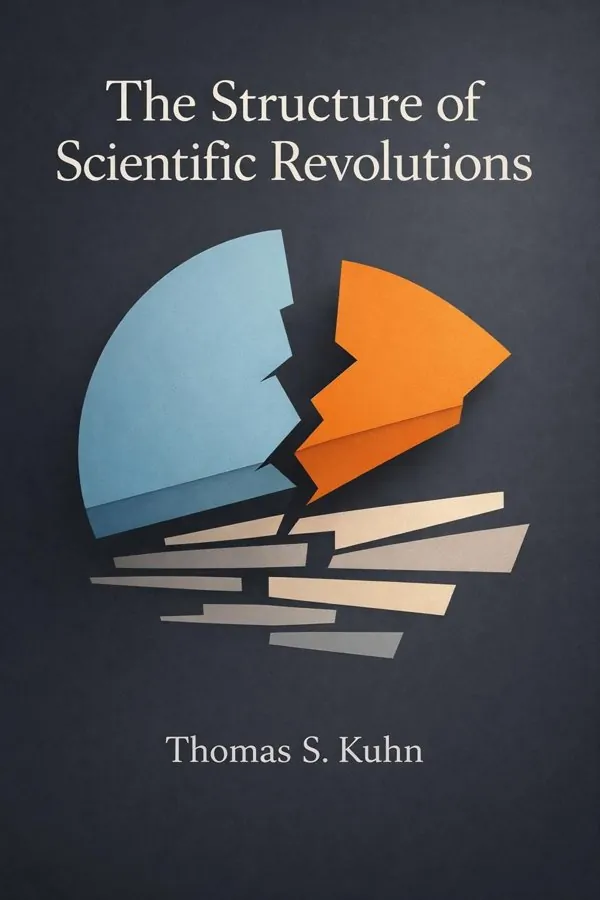
The Structure of Scientific Revolutions
by Thomas S. Kuhn
In this landmark work, Thomas S. Kuhn introduced the concept of 'paradigm shifts' to describe how scientific progress occurs not through linear accumulation of knowledge but through revolutionary changes in fundamental frameworks. The book explores how scientific communities operate, how normal science evolves, and how crises lead to new paradigms that redefine entire fields of inquiry.
Key Takeaways
- 1Normal Science — Every scientific field, once it matures, enters what I call a period of normal science. During this time, practitioners …
- 2The Role of Paradigms — A paradigm, as I use the term, is far more than a theory. It is an entire worldview shared by a scientific community—a c…
- 3Anomaly and Crisis
 10 min read
The Beginning of Infinity
by David Deutsch
The Beginning of Infinity explores the nature of scientific explanation and the limitless potential of human knowledge. David Deutsch argues that progress is not bounded by physical or intellectual constraints, but by our willingness to seek better explanations. Through discussions of quantum theory, philosophy, and the principles of optimism, Deutsch presents a vision of humanity’s capacity for infinite improvement.
Key Takeaways
- 1The Reach of Explanations — A good explanation is one that is difficult to vary while still accounting for what it explains. That simple idea draws …
- 2Optimism and the Principle of Unlimited Progress — Progress, contrary to what many believe, is not a law of nature—it is a feature of the growth of knowledge. Problems are…
- 3The Jump to Universality
 10 min read
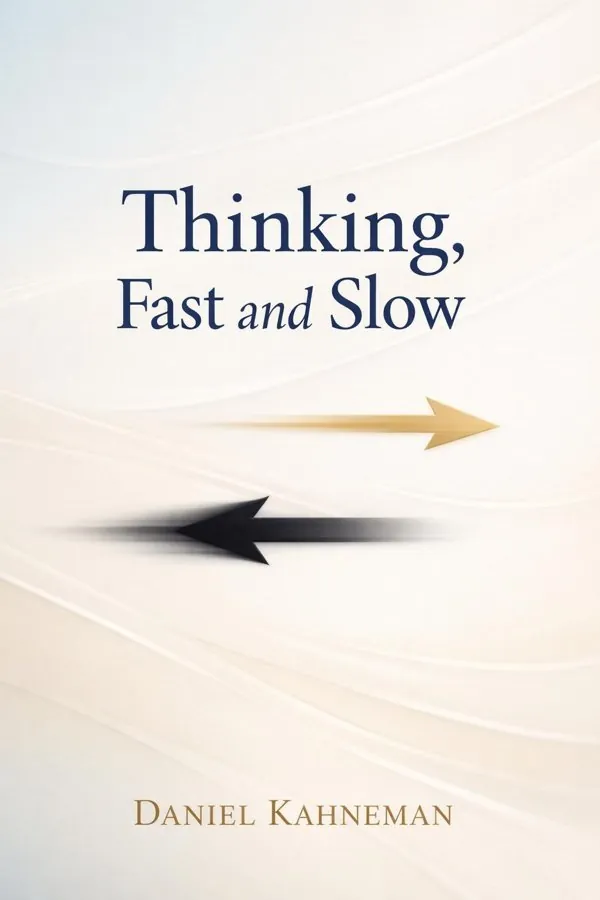
Thinking Fast and Slow
by Daniel Kahneman
In this landmark book, Nobel laureate Daniel Kahneman presents decades of research on how humans think, revealing the dual systems that drive our judgments and decisions: the fast, intuitive, and emotional System 1, and the slow, deliberate, and logical System 2. Through engaging examples and experiments, Kahneman explores cognitive biases, heuristics, and the limits of rationality, offering profound insights into how we make choices in everyday life and professional contexts.
Key Takeaways
- 1The Two Systems of Thought — Our minds work through two interacting systems. System 1 is automatic, fast, and emotional; System 2 is controlled, slow…
- 2Heuristics and Biases: The Architecture of Errors — Our cognitive machinery developed to manage complexity through shortcuts—mental rules of thumb called heuristics. Heuris…
- 3Overconfidence and Illusion of Understanding
 10 min read
Freakonomics
by Steven Levitt
Why do people cheat in some situations but act generously in others? Why do smart policies sometimes fail, while simple changes create outsized results? These are the kinds of questions that made the Freakonomics approach famous. In this book, Steven D. Levitt and Stephen J. Dubner invite readers to go beyond surface explanations and learn a more useful skill: how to think clearly when the world seems confusing. Rather than offering motivational slogans or neat formulas, they show how curiosity, data, and a willingness to challenge assumptions can uncover the hidden logic behind human behavior. What makes this book matter is its practicality. The ideas are not limited to economics classrooms or policy debates; they apply to parenting, business, negotiation, career choices, and everyday decisions. Levitt, a University of Chicago economist known for his work on crime and incentives, teams up with Dubner, a journalist and storyteller, to translate complex insights into memorable lessons. Together, they make a compelling case that better thinking starts with humility, sharper questions, and a habit of following evidence instead of intuition. If you want to solve problems more creatively and understand why people do what they do, this book offers a powerful mental toolkit.
Key Takeaways
- 1The Value of Saying 'I Don’t Know' — Thinking like a Freak starts with the most radical admission you can make: acknowledging your ignorance. When Levitt and…
- 2Incentives and Human Behavior — One of the central ideas in the Freakonomics worldview is that incentives drive behavior, but not always in the way we e…
- 3Thinking Small — Big problems often tempt us into big, dramatic solutions. But one of the most useful lessons in this book is that meanin…
Want the full summary?
Get instant access to this book summary and 500K+ more with Fizz Moment.
Get Free SummaryAvailable on App Store • Free to download
About This List
Books recommended by astrophysicist Neil deGrasse Tyson for understanding the universe and our place in it.
This list features 10 carefully selected books. With FizzRead, you can read AI-powered summaries of each book in just 15 minutes. Get the key takeaways and start applying the insights immediately.
Ready to start reading?
Get instant access to all 10 book summaries and 500K+ more with FizzRead.