
Malcolm Gladwell's Picks: Books That Make You See the World Differently
Malcolm Gladwell is a master storyteller who draws from psychology, sociology, and history. His book recommendations reveal the hidden patterns behind human behavior and success.

 10 min read
Think Again
by Adam Grant
In this book, organizational psychologist Adam Grant explores the importance of rethinking and unlearning in a rapidly changing world. He argues that intelligence is not just about thinking and learning but also about the ability to question one’s own beliefs and update them when presented with new evidence. Through engaging research and stories, Grant shows how individuals and organizations can benefit from cultivating mental flexibility and intellectual humility.
Key Takeaways
- 1Part I – Individual Rethinking — At the heart of individual rethinking lies an uncomfortable truth: we love our own ideas more than we love truth itself.…
- 2The Joy of Being Wrong — If individual rethinking begins with humility, it flourishes through the joy of being wrong. The phrase may sound parado…
 10 min read
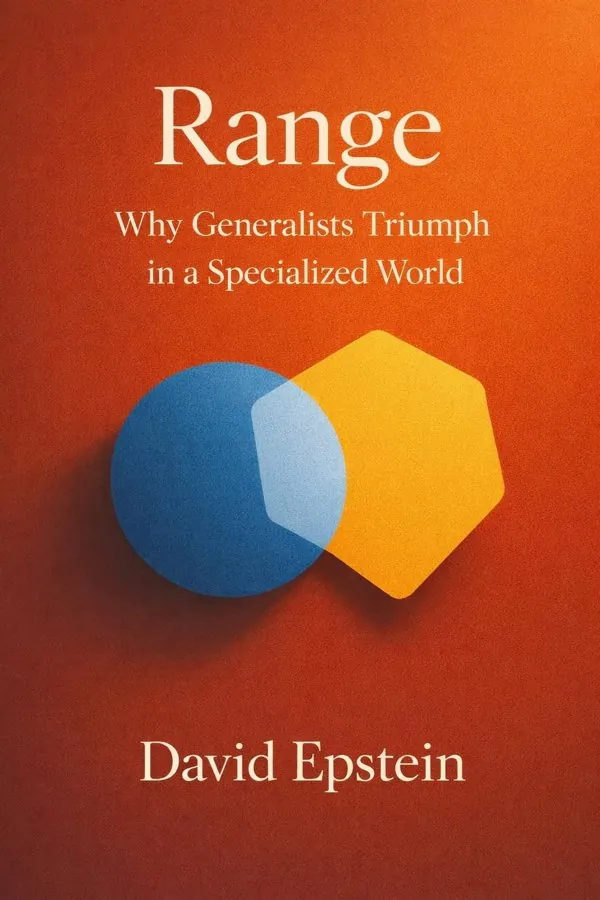
Range
by David Epstein
In Range, David Epstein argues that in a complex and rapidly changing world, generalists—those who explore broadly and develop diverse skills—are more likely to excel than specialists who focus narrowly. Drawing on research from sports, science, education, and business, Epstein shows that early specialization can hinder creativity and adaptability, while a wide range of experiences fosters innovation and problem-solving. The book challenges conventional wisdom about success and expertise, advocating for curiosity, experimentation, and learning across domains.
Key Takeaways
- 1The Power of Exploration: Tiger Woods vs. Roger Federer — In the opening chapter, I juxtapose two developmental paths that symbolize one of the most important questions of modern…
- 2Kind vs. Wicked Learning Environments — To truly understand why generalists often outperform specialists, we must look at the nature of learning itself. In the …
- 3The Sampling Period: Why Exploration Fosters Mastery
 10 min read
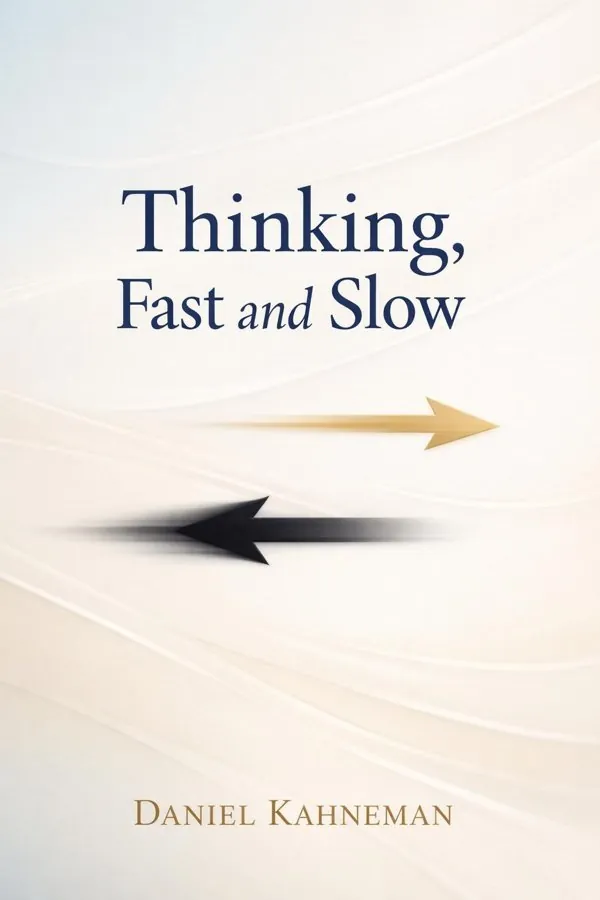
Thinking Fast and Slow
by Daniel Kahneman
In this landmark book, Nobel laureate Daniel Kahneman presents decades of research on how humans think, revealing the dual systems that drive our judgments and decisions: the fast, intuitive, and emotional System 1, and the slow, deliberate, and logical System 2. Through engaging examples and experiments, Kahneman explores cognitive biases, heuristics, and the limits of rationality, offering profound insights into how we make choices in everyday life and professional contexts.
Key Takeaways
- 1The Two Systems of Thought — Our minds work through two interacting systems. System 1 is automatic, fast, and emotional; System 2 is controlled, slow…
- 2Heuristics and Biases: The Architecture of Errors — Our cognitive machinery developed to manage complexity through shortcuts—mental rules of thumb called heuristics. Heuris…
- 3Overconfidence and Illusion of Understanding
 10 min read
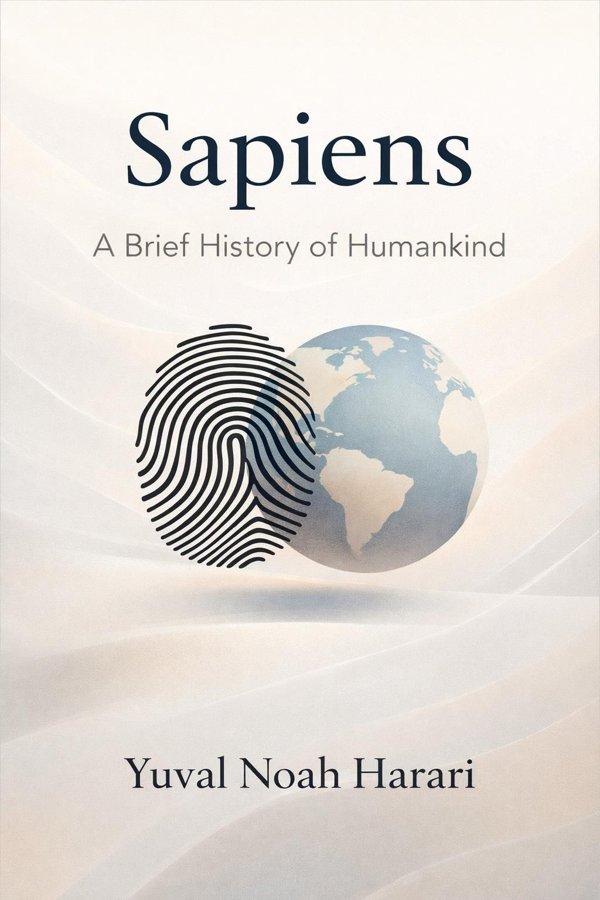
Sapiens
by Yuval Noah Harari
Sapiens: A Brief History of Humankind is a historical essay that explores the evolution of the human species from the earliest Homo sapiens to the modern era. Yuval Noah Harari examines how biology, anthropology, and economics have shaped human societies, highlighting three major revolutions: the cognitive, the agricultural, and the scientific. The book offers a panoramic view of how ideas, myths, and social structures have enabled humans to dominate the planet.
Key Takeaways
- 1The Cognitive Revolution: The birth of imagination — About seventy thousand years ago, something extraordinary happened. Our ancestors, who had lived much like other animals…
- 2The Agricultural Revolution: The trap of progress — Around ten thousand years ago, humans began to cultivate crops and domesticate animals, converting from nomadic foragers…
 10 min read
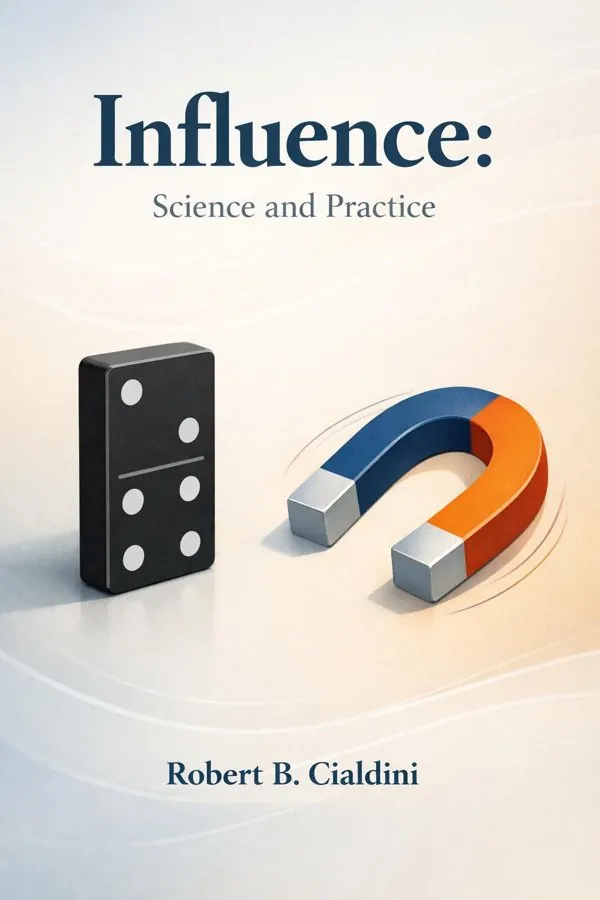
Influence
by Robert Cialdini
This book explores the psychology of persuasion and the mechanisms that drive people to say 'yes'. Robert B. Cialdini, a renowned social psychologist, presents six universal principles of influence—reciprocity, commitment and consistency, social proof, authority, liking, and scarcity—supported by decades of empirical research. It is widely used in marketing, negotiation, and behavioral science to understand and ethically apply persuasive techniques.
Key Takeaways
- 1Weapons of Influence — Before examining each principle individually, we must understand the nature of automatic influence. Humans, like other a…
- 2Reciprocity — One of the oldest and most pervasive rules of human conduct is the rule of reciprocity. Across cultures and throughout h…
- 3Commitment and Consistency
 10 min read
The Tipping Point
by Malcolm Gladwell
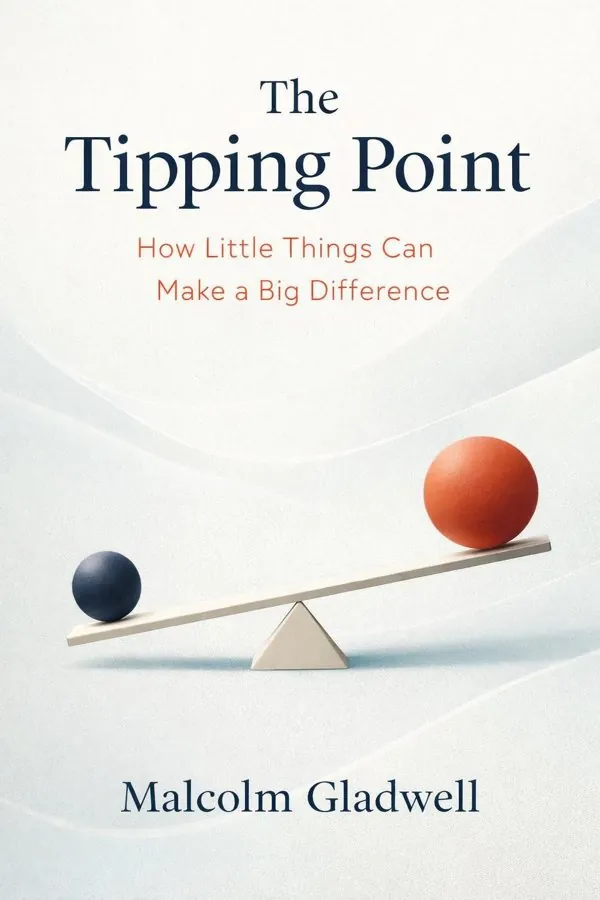
The Tipping Point explores how small actions at the right time, in the right place, and with the right people can create a tipping point for widespread social change. Malcolm Gladwell examines the factors that cause ideas, products, messages, and behaviors to spread like epidemics, introducing key concepts such as the Law of the Few, the Stickiness Factor, and the Power of Context.
Key Takeaways
- 1Part One — The Law of the Few: How a Key Minority Ignites the Many — When it comes to the spread of ideas, one crucial fact is often overlooked: social influence is never evenly distributed…
- 2Part Two — The Stickiness Factor: The Secret of Messages That Stay — Influence depends not only on who spreads an idea but also on the character of the idea itself—specifically, how deeply …
- 3Part Three — The Power of Context: The Hidden Influence of Environments
 10 min read
Outliers
by Malcolm Gladwell
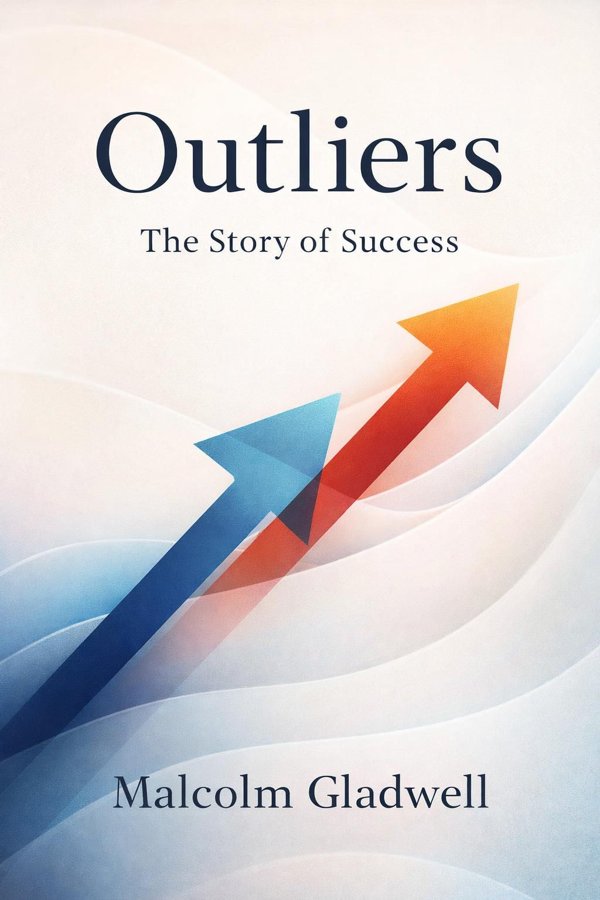
Why do some people rise to extraordinary heights while others, who seem just as smart or hardworking, never get the same chance? In Outliers, Malcolm Gladwell challenges the comforting myth that success is purely a matter of talent and grit. Instead, he shows that exceptional achievement usually grows from a powerful mix of opportunity, timing, cultural inheritance, family background, and sustained practice. The result is a book that changes how you think about winners—not as isolated geniuses, but as products of environments that made their success possible. Gladwell is uniquely suited to tell this story. As a longtime writer for The New Yorker and the bestselling author of books like The Tipping Point, Blink, and David and Goliath, he has built a reputation for turning research and case studies into memorable, thought-provoking stories. In Outliers, he uses examples from hockey, technology, aviation, education, and math to reveal the hidden architecture behind success. This book matters because it doesn’t just explain why some people make it big. It also asks a more important question: if opportunity shapes outcomes so strongly, how can we build fairer systems that help more people thrive?
Key Takeaways
- 1Chapter One: The Matthew Effect—Why Early Advantage Leads to Success — One of Gladwell’s most memorable insights in Outliers is that success often begins with small, almost invisible advantag…
- 2Chapter Two: The 10,000-Hour Rule—Practice Depends on Opportunity — Gladwell popularized the idea that world-class mastery often requires around 10,000 hours of deliberate practice. But hi…
- 3Chapter Three: The Trouble with Genius—Why IQ Isn’t a Golden Ticket — Gladwell argues that intelligence matters, but only up to a point. Once someone reaches a high enough level of cognitive…
 10 min read
Freakonomics
by Steven Levitt
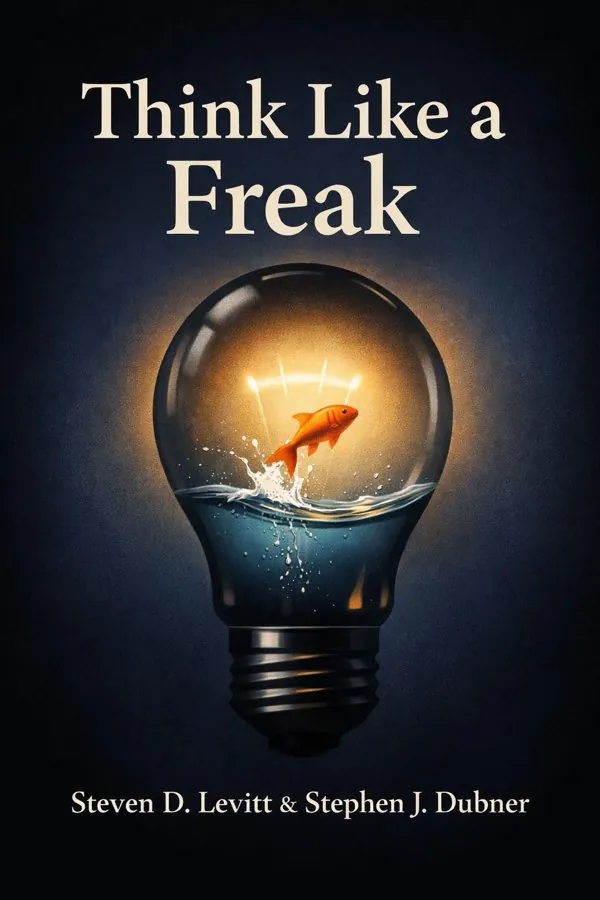
Why do people cheat in some situations but act generously in others? Why do smart policies sometimes fail, while simple changes create outsized results? These are the kinds of questions that made the Freakonomics approach famous. In this book, Steven D. Levitt and Stephen J. Dubner invite readers to go beyond surface explanations and learn a more useful skill: how to think clearly when the world seems confusing. Rather than offering motivational slogans or neat formulas, they show how curiosity, data, and a willingness to challenge assumptions can uncover the hidden logic behind human behavior. What makes this book matter is its practicality. The ideas are not limited to economics classrooms or policy debates; they apply to parenting, business, negotiation, career choices, and everyday decisions. Levitt, a University of Chicago economist known for his work on crime and incentives, teams up with Dubner, a journalist and storyteller, to translate complex insights into memorable lessons. Together, they make a compelling case that better thinking starts with humility, sharper questions, and a habit of following evidence instead of intuition. If you want to solve problems more creatively and understand why people do what they do, this book offers a powerful mental toolkit.
Key Takeaways
- 1The Value of Saying 'I Don’t Know' — Thinking like a Freak starts with the most radical admission you can make: acknowledging your ignorance. When Levitt and…
- 2Incentives and Human Behavior — One of the central ideas in the Freakonomics worldview is that incentives drive behavior, but not always in the way we e…
- 3Thinking Small — Big problems often tempt us into big, dramatic solutions. But one of the most useful lessons in this book is that meanin…
 10 min read
Quiet
by Susan Cain
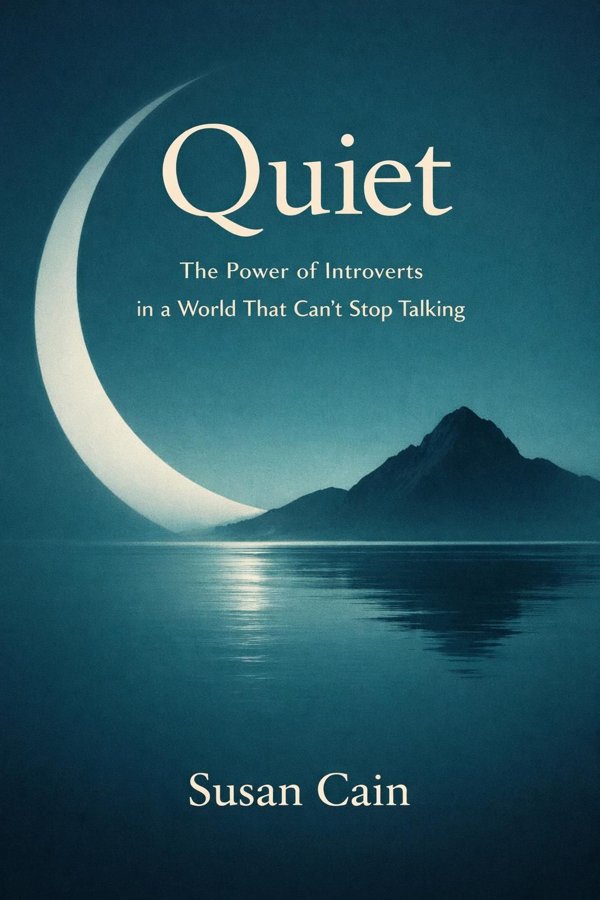
What if the traits you’ve been told to outgrow—quietness, caution, thoughtfulness, a need for solitude—are actually some of your greatest strengths? In Quiet, Susan Cain challenges one of the most deeply embedded assumptions in modern life: that the boldest voice in the room is the most capable, creative, or worthy of attention. With warmth, research, and sharp cultural analysis, she shows how workplaces, schools, and even social norms are often built around an extroverted model of success, leaving millions of introverts feeling misunderstood or underestimated. This book matters because it doesn’t merely defend introverts; it reframes how we think about talent, leadership, collaboration, and human potential. Cain draws on psychology, neuroscience, history, and real-life stories to explain why some people flourish through stimulation and sociability, while others do their best thinking in calmer, quieter conditions. As an American author, lecturer, and former corporate lawyer known for her influential work on introversion and leadership, Cain brings both credibility and empathy to the subject. Quiet is ultimately a powerful invitation to stop confusing volume with value—and to build a world where reflective people can thrive on their own terms.
Key Takeaways
- 1The Extrovert Ideal: A Cultural Obsession — At the center of Quiet is Susan Cain’s idea of the “Extrovert Ideal,” the belief that the most admirable person is socia…
- 2The Biological and Psychological Roots of Introversion — Cain makes a crucial distinction: introversion is not a flaw, a fear, or a social failure. It is a temperament, shaped i…
- 3The Power of Solitude — One of Quiet’s most important arguments is that solitude is not the same as loneliness. Solitude can be a source of crea…
 10 min read
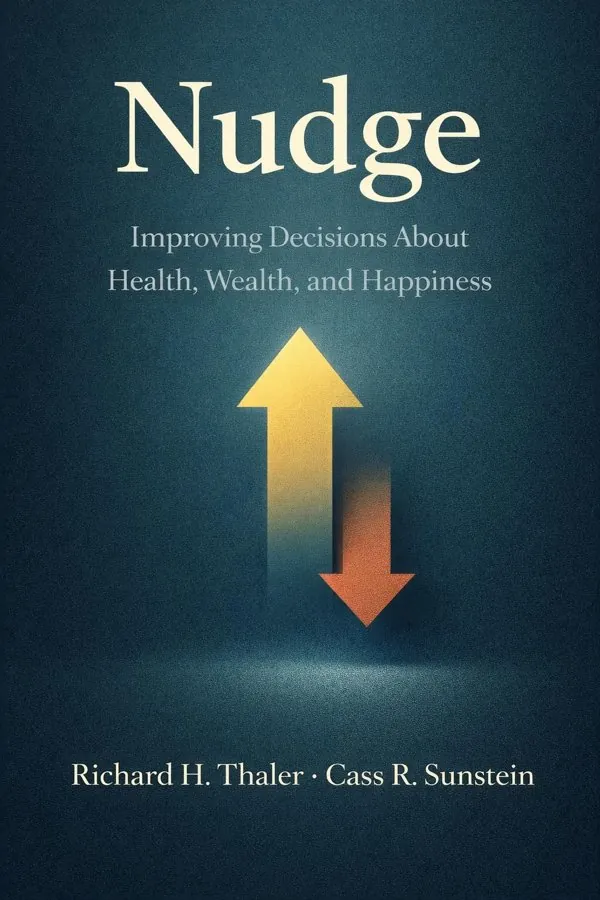
Nudge
by Richard H. Thaler, Cass R. Sunstein
Nudge explores how small design changes in the way choices are presented can significantly influence human behavior and decision-making. Drawing on behavioral economics and psychology, Thaler and Sunstein introduce the concept of 'choice architecture'—the idea that by structuring choices in a way that nudges people toward better decisions, policymakers and organizations can improve outcomes in areas such as health, finance, and the environment without restricting freedom of choice.
Key Takeaways
- 1Introduction to Human Decision-Making — When we began studying economic behavior, we noticed something striking: the people in our data were not the perfectly r…
- 2The Concept of Choice Architecture — Every environment where choices are made—cafeterias, websites, offices, or government forms—has an architecture. Someone…
- 3Libertarian Paternalism Defined
Want the full summary?
Get instant access to this book summary and 500K+ more with Fizz Moment.
Get Free SummaryAvailable on App Store • Free to download
About This List
Malcolm Gladwell is a master storyteller who draws from psychology, sociology, and history. His book recommendations reveal the hidden patterns behind human behavior and success.
This list features 10 carefully selected books. With FizzRead, you can read AI-powered summaries of each book in just 15 minutes. Get the key takeaways and start applying the insights immediately.
Ready to start reading?
Get instant access to all 10 book summaries and 500K+ more with FizzRead.