
Joe Rogan's Go-To Books: What He Can't Stop Recommending
Joe Rogan's podcast reaches millions, and certain books come up in conversation again and again. His picks lean toward discipline, ancient wisdom, and understanding human nature — books that challenge you to think harder and push further.
 10 min read
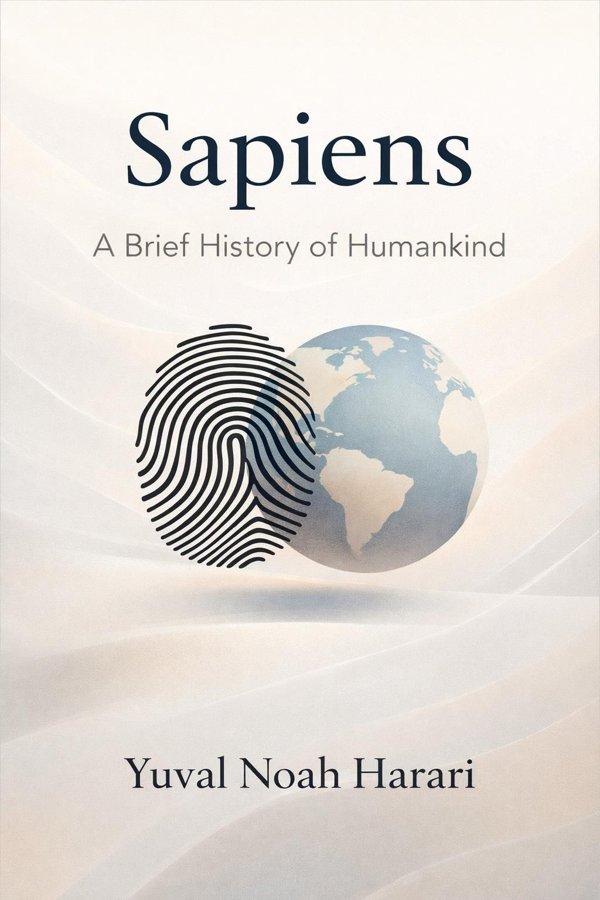
Sapiens
by Yuval Noah Harari
Sapiens: A Brief History of Humankind is a historical essay that explores the evolution of the human species from the earliest Homo sapiens to the modern era. Yuval Noah Harari examines how biology, anthropology, and economics have shaped human societies, highlighting three major revolutions: the cognitive, the agricultural, and the scientific. The book offers a panoramic view of how ideas, myths, and social structures have enabled humans to dominate the planet.
Key Takeaways
- 1The Cognitive Revolution: The birth of imagination — About seventy thousand years ago, something extraordinary happened. Our ancestors, who had lived much like other animals…
- 2The Agricultural Revolution: The trap of progress — Around ten thousand years ago, humans began to cultivate crops and domesticate animals, converting from nomadic foragers…
 10 min read
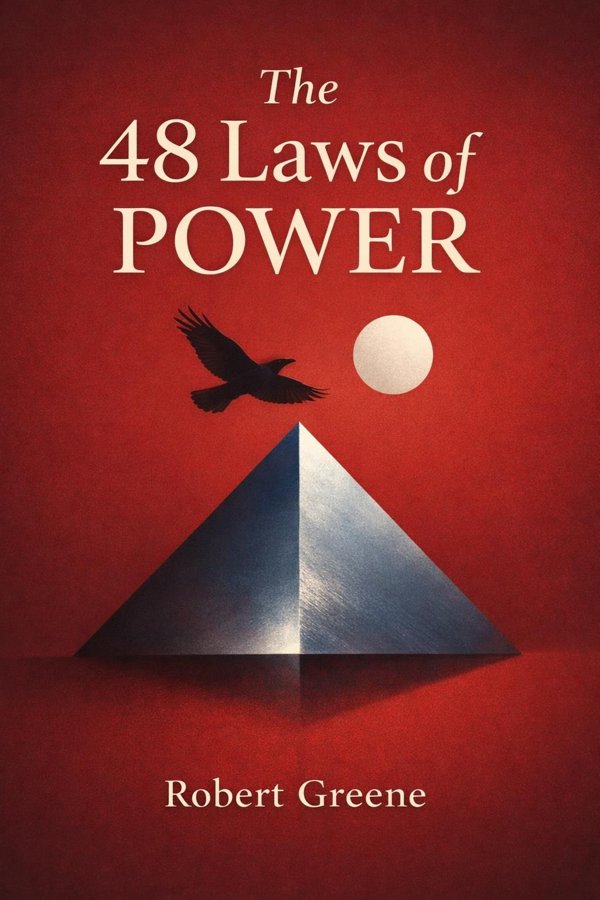
48 Laws of Power
by Robert Greene
The 48 Laws of Power is a modern classic on strategy, influence, and human behavior. Drawing from historical examples of powerful figures such as Machiavelli, Sun Tzu, and various political leaders, Robert Greene distills centuries of wisdom into 48 concise laws designed to help readers understand and navigate the dynamics of power in social, professional, and political contexts.
Key Takeaways
- 1Law 1–5: Foundations of Power—Perception, Discretion, and Strategic Humility — Power begins with awareness. To act effectively, you must first understand how others perceive you. Many destroy their o…
- 2Law 6–10: Capturing Attention and Building Reputation — Power cannot thrive in obscurity. Visibility is the oxygen of influence, but it must be managed like a flame—never too b…
- 3Law 11–15: Relationships, Independence, and Strategic Absence
 10 min read
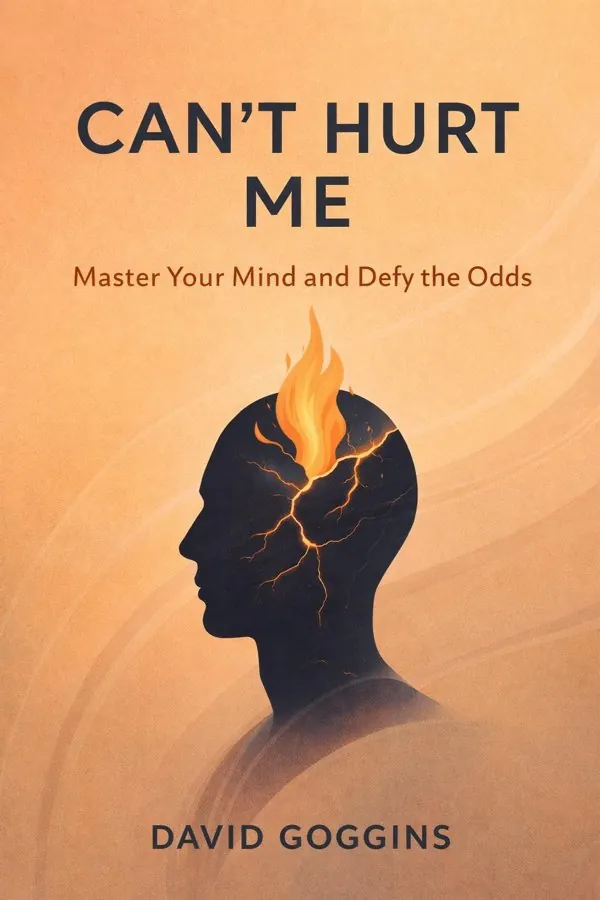
Can't Hurt Me
by David Goggins
What if the life you’ve been given—your trauma, your failures, your fear, your self-doubt—could become the raw material for an extraordinary transformation? That’s the question at the heart of Can't Hurt Me, David Goggins’s intensely personal memoir and mindset manual. More than a story about military achievement or athletic endurance, this book is a challenge to anyone who has ever felt stuck, broken, or limited by their past. Goggins takes readers through a life marked by abuse, racism, poverty, obesity, and hopelessness, then shows how he rebuilt himself through radical accountability, discipline, and a willingness to embrace discomfort. What makes this book matter is its refusal to offer easy inspiration. Goggins doesn’t sell positive thinking or quick fixes. Instead, he argues that growth begins when we stop negotiating with ourselves and start confronting the truths we’d rather avoid. As a retired U.S. Navy SEAL, ultramarathon runner, triathlete, and motivational speaker, he writes from lived experience, not theory. Can't Hurt Me resonates because it turns resilience into a practice. It’s a wake-up call for readers who want more than motivation—they want proof that the mind, when trained, can push far beyond what most people believe is possible.
Key Takeaways
- 1Early Life and Childhood Shaped by Adversity — Goggins’s early life is the emotional bedrock of Can't Hurt Me. He grew up in an abusive home where violence, fear, and …
- 2Struggles with Obesity and Hopelessness — After escaping his father’s house, Goggins did not immediately step into freedom or confidence. Instead, he entered a di…
- 3Turning Point: The Decision to Change — The real turning point in Can't Hurt Me is not a medal, a race, or military success—it is the moment Goggins decides he …
 10 min read
Meditations
by Marcus Aurelius
What does it mean to stay calm, just, and fully human in a world full of pressure, conflict, ego, and loss? That is the enduring question at the heart of Meditations, the private journal of Roman emperor Marcus Aurelius. Written in Greek and never intended for publication, these reflections are not polished philosophy lectures. They are personal reminders from one of the most powerful men in the world trying to govern not only an empire, but also his own mind. That tension is exactly why this book still matters. Meditations remains one of the clearest guides to Stoic philosophy because it speaks directly to everyday struggles: dealing with difficult people, accepting change, resisting vanity, and acting with integrity when no one is watching. Marcus Aurelius is remembered as both a Roman emperor and a Stoic philosopher, a rare figure often described as a philosopher-king. His reflections on virtue, discipline, mortality, and inner peace have influenced readers for centuries. If you want practical wisdom rather than abstract theory, Meditations offers a deeply human blueprint for living with clarity, resilience, and moral purpose.
Key Takeaways
- 1Book I: Lessons from Those Who Shaped Me — The opening book of Meditations is an extraordinary act of gratitude. Instead of launching into abstract arguments, Marc…
- 2Book II: Accepting Fate and Living Rationally — Book II opens with one of the most quoted passages in Stoic philosophy: a morning reminder that we will meet interfering…
- 3Book III: Integrity Beyond Fame — In Book III, Marcus Aurelius turns his attention to time, mortality, and the danger of living for approval. He reminds h…
 10 min read
Man's Search for Meaning
by Viktor Frankl
What keeps a person going when everything familiar has been taken away—comfort, identity, loved ones, freedom, and even the expectation of tomorrow? That is the unbearable and essential question at the heart of *Man's Search for Meaning*. Viktor E. Frankl’s landmark book is far more than a Holocaust memoir. It is a profound study of human endurance, an examination of suffering, and a practical philosophy for anyone trying to live with purpose in hard times. Drawing on his experiences in Nazi concentration camps, Frankl explores how people respond when life is reduced to its barest terms and why some still manage to preserve dignity, hope, and inner freedom. What makes this book endure is that Frankl does not offer empty inspiration. He writes as an Austrian neurologist, psychiatrist, and Holocaust survivor who later developed logotherapy, a school of psychotherapy centered on meaning as the primary human motivation. His insight is simple but life-changing: even when we cannot change our circumstances, we can still choose our response. That idea has made this book one of the most influential works in psychology and self-help, especially for readers facing grief, burnout, uncertainty, or the quiet fear that life has lost direction.
Key Takeaways
- 1The Shock of Arrival and the Dehumanization of Camp Life — When Frankl first arrived at Auschwitz, the destruction of the self began immediately. The process was systematic: priso…
- 2Emotional Detachment and the Apathy that Defines Survival — After the first shock came a second psychological stage: apathy. Frankl shows that this numbness was not indifference in…
- 3Moral Choice and Inner Freedom in the Midst of Suffering — One of the book’s most powerful claims is that even under extreme oppression, a human being retains a final freedom: the…
 10 min read
Atomic Habits
by James Clear
What if the quality of your life depends less on dramatic breakthroughs and more on the tiny actions you repeat every day? In Atomic Habits, James Clear argues that lasting transformation does not come from radical reinvention, but from small, consistent improvements that compound over time. The book explains how habits shape identity, influence performance, and quietly determine whether we move toward the future we want or drift away from it. Rather than relying on motivation alone, Clear shows how to design systems that make good behaviors easier and bad behaviors harder. The book matters because most people fail to change not because they lack ambition, but because they use strategies that fight human nature. Clear combines insights from psychology, neuroscience, behavioral economics, and real-world examples from sports, business, and personal development to create a practical framework anyone can apply. As a writer and speaker known for his work on habit formation and continuous improvement, he has helped millions of readers rethink productivity and self-discipline. Atomic Habits stands out because it turns behavior change into something concrete, manageable, and deeply empowering.
Key Takeaways
- 1Tiny changes create remarkable results — We tend to overestimate the importance of one big moment and underestimate the power of small daily improvements. One wo…
- 2Focus on systems, not goals — Goals set direction, but systems determine progress. That distinction changes everything. Most people think achievement …
- 3Identity drives lasting behavior change — The most durable habits are not built by forcing yourself to act differently for a few days. They are built by becoming …
 10 min read
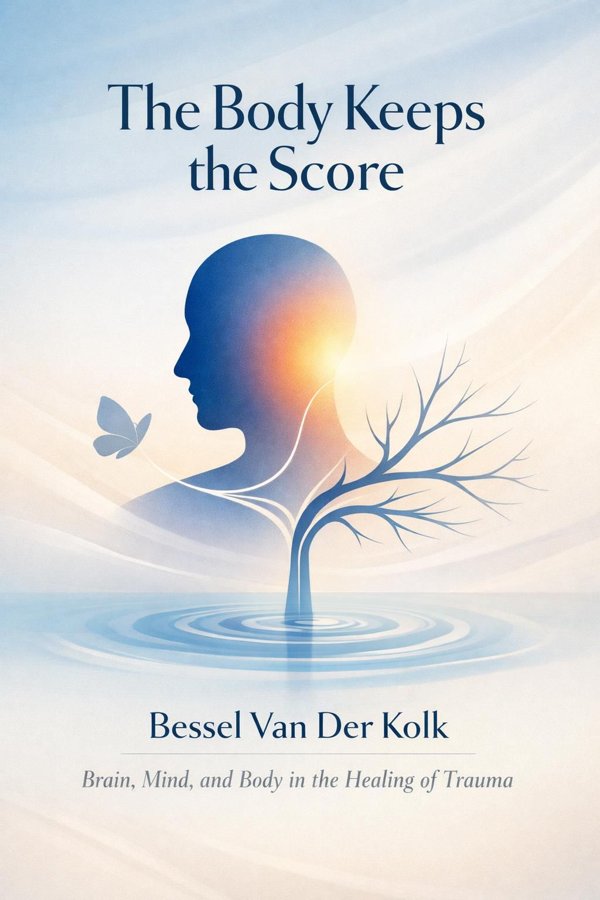
The Body Keeps the Score
by Bessel van der Kolk
What if trauma is not just something you remember, but something your body continues to live? That is the central, unforgettable insight of *The Body Keeps the Score*. In this influential psychology classic, Bessel van der Kolk explains why traumatic experiences do not simply fade with time or disappear through willpower. Instead, they can reshape the brain, dysregulate the nervous system, and alter how people feel, think, relate, and even move through everyday life. The result is often a life organized around survival rather than presence, trust, or joy. What makes this book so important is that it does more than describe trauma’s damage—it offers a hopeful, science-based map for recovery. Van der Kolk draws on decades of work as a psychiatrist, researcher, and educator, including his experience founding the Trauma Center in Brookline, Massachusetts. With clarity and compassion, he bridges neuroscience, clinical stories, and practical treatment approaches. For readers trying to understand PTSD, childhood abuse, chronic stress, or emotional dysregulation, this book provides both language and direction. It shows that healing is possible, but only when we address the body as seriously as we address the mind.
Key Takeaways
- 1Early Research on Trauma — One of the book’s most powerful contributions is its account of how trauma finally became visible to modern psychiatry. …
- 2The Brain in Trauma — Van der Kolk explains trauma through a clear neurological lens: trauma changes how the brain detects danger, stores memo…
- 3Body–Mind Connection — A central message of *The Body Keeps the Score* is that trauma is not just remembered intellectually—it is carried physi…
 10 min read
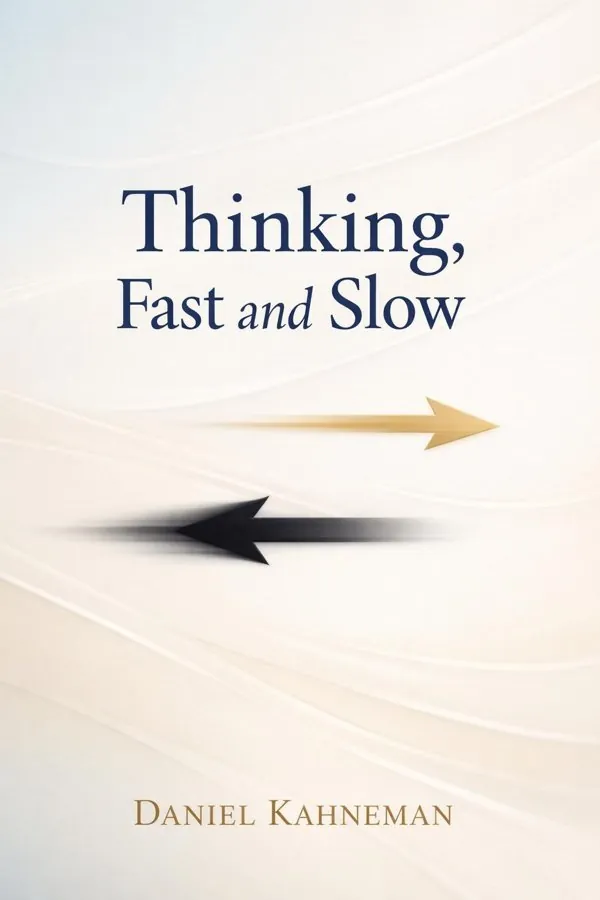
Thinking Fast and Slow
by Daniel Kahneman
In this landmark book, Nobel laureate Daniel Kahneman presents decades of research on how humans think, revealing the dual systems that drive our judgments and decisions: the fast, intuitive, and emotional System 1, and the slow, deliberate, and logical System 2. Through engaging examples and experiments, Kahneman explores cognitive biases, heuristics, and the limits of rationality, offering profound insights into how we make choices in everyday life and professional contexts.
Key Takeaways
- 1The Two Systems of Thought — Our minds work through two interacting systems. System 1 is automatic, fast, and emotional; System 2 is controlled, slow…
- 2Heuristics and Biases: The Architecture of Errors — Our cognitive machinery developed to manage complexity through shortcuts—mental rules of thumb called heuristics. Heuris…
- 3Overconfidence and Illusion of Understanding
 10 min read
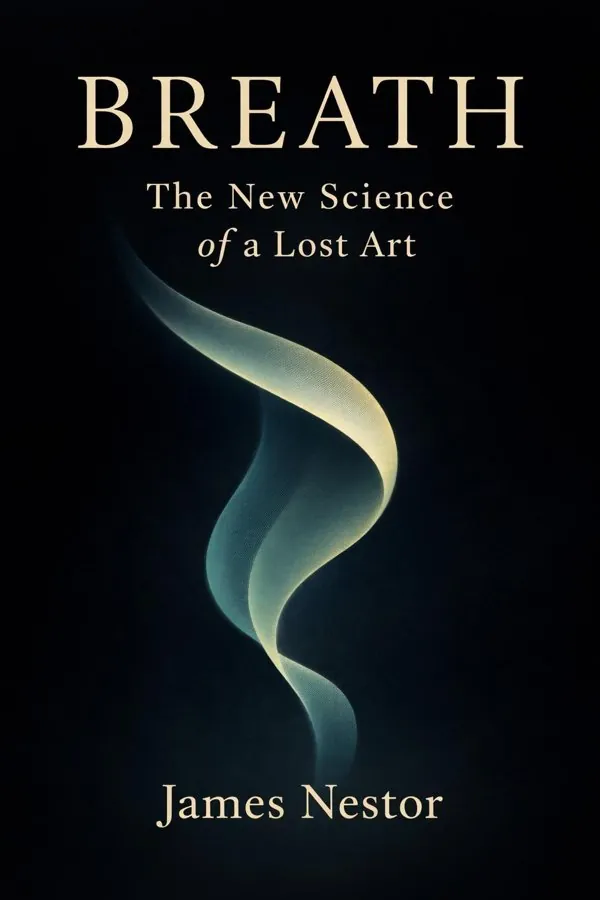
Breath
by James Nestor
In 'Breath: The New Science of a Lost Art', science journalist James Nestor explores the transformative power of proper breathing. Drawing on ancient practices and modern research, Nestor reveals how changing the way we breathe can improve health, performance, and longevity. Through personal experiments and interviews with experts, he uncovers the physiological and psychological benefits of breathing techniques long forgotten in the modern world.
Key Takeaways
- 1Experiment Setup — When I began working with researchers at Stanford University, we wanted to strip away assumptions and see what truly hap…
- 2Historical Context — In my search to understand how breathing became distorted, I turned back through history. Long before modern medicine, a…
- 3Modern Decline
Want the full summary?
Get instant access to this book summary and 500K+ more with Fizz Moment.
Get Free SummaryAvailable on App Store • Free to download
About This List
Joe Rogan's podcast reaches millions, and certain books come up in conversation again and again. His picks lean toward discipline, ancient wisdom, and understanding human nature — books that challenge you to think harder and push further.
This list features 9 carefully selected books. With FizzRead, you can read AI-powered summaries of each book in just 15 minutes. Get the key takeaways and start applying the insights immediately.
Ready to start reading?
Get instant access to all 9 book summaries and 500K+ more with FizzRead.