
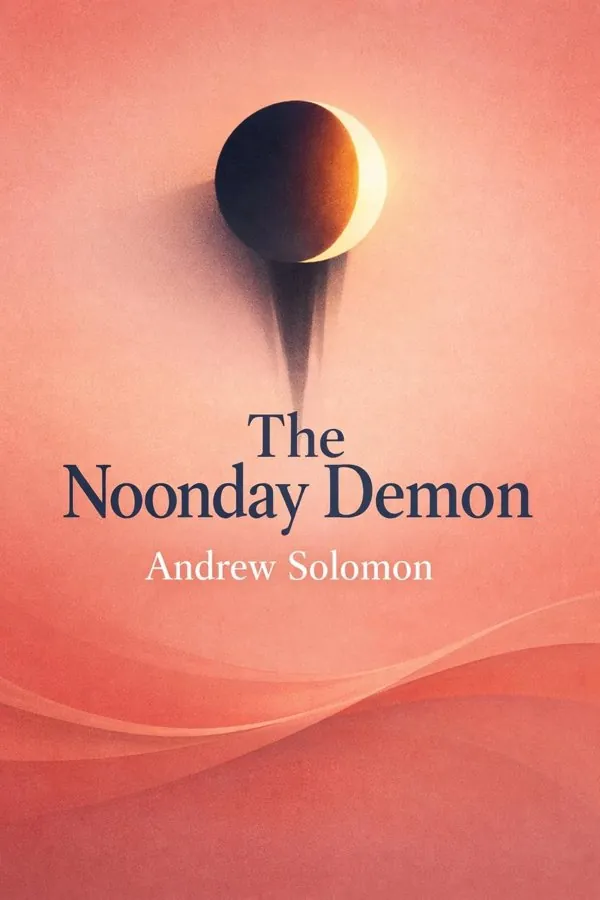
The Noonday Demon: An Atlas of Depression: Summary & Key Insights
 10 min9 chaptersAudio available
About This Book
A comprehensive exploration of depression that combines personal narrative, cultural analysis, and scientific research. Andrew Solomon examines the illness from multiple perspectives—psychological, social, and biological—while weaving in his own experiences with depression. The book offers insight into the nature of the disorder, its treatment, and its impact on individuals and society.
The Noonday Demon: An Atlas of Depression
A comprehensive exploration of depression that combines personal narrative, cultural analysis, and scientific research. Andrew Solomon examines the illness from multiple perspectives—psychological, social, and biological—while weaving in his own experiences with depression. The book offers insight into the nature of the disorder, its treatment, and its impact on individuals and society.
Who Should Read The Noonday Demon: An Atlas of Depression?
This book is perfect for anyone interested in mental_health and looking to gain actionable insights in a short read. Whether you're a student, professional, or lifelong learner, the key ideas from The Noonday Demon: An Atlas of Depression by Andrew Solomon will help you think differently.
- ✓Readers who enjoy mental_health and want practical takeaways
- ✓Professionals looking to apply new ideas to their work and life
- ✓Anyone who wants the core insights of The Noonday Demon: An Atlas of Depression in just 10 minutes
Want the full summary?
Get instant access to this book summary and 500K+ more with Fizz Moment.
Get Free SummaryAvailable on App Store • Free to download
Key Chapters
To understand depression fully, we must begin before the modern era, before neurotransmitters and diagnostic manuals. The ancients spoke not of depression but of melancholy. The Greeks believed it stemmed from an excess of black bile; Aristotle saw it as the burden of great souls. These old conceptions may sound quaint, but they were in their way humane, for they treated despair as part of our shared humanity rather than a stigmatized aberration. In the centuries that followed, melancholy took on romantic hues. Artists and poets claimed it as the companion of genius. The seventeenth century’s Robert Burton wrote that all men are melancholic by nature, some merely more so than others. Eventually, the language of spirit yielded to the language of science. The nineteenth century reframed melancholy as depressive illness, and by the twentieth, psychiatry sought biochemical cause and pharmaceutical relief. But even as science advanced, some understanding was lost. Depression became a disease to be eradicated rather than a state to be understood. I do not mean to idealize suffering but to insist that depression involves meaning as well as mechanism. History teaches us that our definitions reflect our values. If melancholy once defined the contemplative soul, depression now defines the malfunctioning one. In exploring that transformation, we glimpse both our progress and our loss.
My own depression came upon me stealthily, then completely. At first it was fatigue that sleep would not cure, a heaviness that turned affection into irritation and nourishment into ashes. There is a point in severe depression at which language fails. One does not feel sadness in the ordinary sense; one feels nothing—or worse than nothing, a kind of malign vacancy. I became incapable of love, of thought, of touch. What saved me, paradoxically, was description: the attempt to name what I felt. Writing gave me distance; it created a small space between my experience and my understanding. That space became the beginning of recovery. Still, recovery was not a heroic ascent but a fragile truce with the illness. I learned that depression teaches a cruel humility. It dismantles one’s certainty about strength, about will, about the stability of self. Yet, in its aftermath, there grows an empathy for others’ pain that cannot be learned by any other means. Each encounter with depression is partly private, but in telling my story, I found others mirrored it. That mutual recognition, the sense that pain could be articulated and shared, restored to me the belief that connection is possible even in despair.
+ 7 more chapters — available in the FizzRead app
All Chapters in The Noonday Demon: An Atlas of Depression
About the Author
Andrew Solomon is an American writer on politics, culture, and psychology. He is best known for his works on mental health and family diversity, including 'The Noonday Demon' and 'Far from the Tree'. Solomon has received numerous awards for his contributions to literature and mental health advocacy.
Get This Summary in Your Preferred Format
Read or listen to the The Noonday Demon: An Atlas of Depression summary by Andrew Solomon anytime, anywhere. FizzRead offers multiple formats so you can learn on your terms — all free.
Available formats: App · Audio · PDF · EPUB — All included free with FizzRead
Download The Noonday Demon: An Atlas of Depression PDF and EPUB Summary
Key Quotes from The Noonday Demon: An Atlas of Depression
“To understand depression fully, we must begin before the modern era, before neurotransmitters and diagnostic manuals.”
“My own depression came upon me stealthily, then completely.”
Frequently Asked Questions about The Noonday Demon: An Atlas of Depression
A comprehensive exploration of depression that combines personal narrative, cultural analysis, and scientific research. Andrew Solomon examines the illness from multiple perspectives—psychological, social, and biological—while weaving in his own experiences with depression. The book offers insight into the nature of the disorder, its treatment, and its impact on individuals and society.
You Might Also Like
Big Feelings: How to Be Okay When Things Are Not Okay
Liz Fosslien, Mollie West Duffy
10 min
Creative Arts Therapies Handbook: Art, Music and Dance Therapy Practices for Wellbeing
Susan I. Buchalter
10 min
Emotional First Aid: Healing Rejection, Guilt, Failure, and Other Everyday Hurts
Guy Winch
10 min
Lost Connections: Why You're Depressed and How to Find Hope
Johann Hari
10 min
No Time to Panic: How to Stop Worrying and Embrace Life
Matt Gutman
10 min
Overcoming Mobbing: A Recovery Guide for Workplace Aggression and Bullying
Maureen Duffy, Len Sperry
10 minReady to read The Noonday Demon: An Atlas of Depression?
Get the full summary and 500K+ more books with Fizz Moment.