
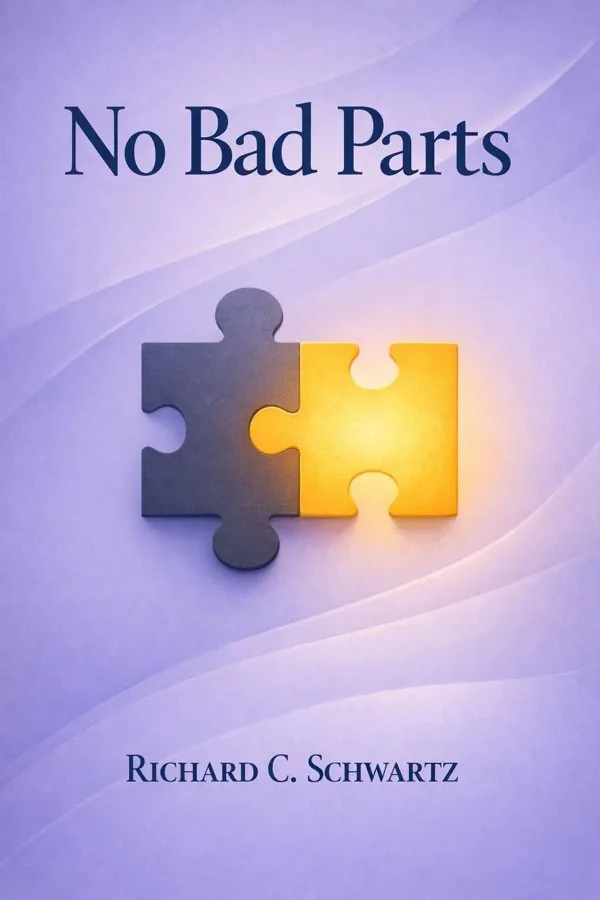
No Bad Parts: Healing Trauma and Restoring Wholeness with the Internal Family Systems Model: Summary & Key Insights
 10 min7 chaptersAudio available
About This Book
In this groundbreaking work, Richard C. Schwartz introduces readers to the Internal Family Systems (IFS) model, a transformative approach to psychotherapy that views the mind as composed of multiple 'parts' or subpersonalities. Rather than pathologizing these parts, Schwartz encourages embracing them with compassion, recognizing that even the most troubling aspects of ourselves have positive intentions. Through practical guidance and case examples, the book shows how to heal inner conflicts, release burdens of trauma, and restore a sense of inner harmony and wholeness.
No Bad Parts: Healing Trauma and Restoring Wholeness with the Internal Family Systems Model
In this groundbreaking work, Richard C. Schwartz introduces readers to the Internal Family Systems (IFS) model, a transformative approach to psychotherapy that views the mind as composed of multiple 'parts' or subpersonalities. Rather than pathologizing these parts, Schwartz encourages embracing them with compassion, recognizing that even the most troubling aspects of ourselves have positive intentions. Through practical guidance and case examples, the book shows how to heal inner conflicts, release burdens of trauma, and restore a sense of inner harmony and wholeness.
Who Should Read No Bad Parts: Healing Trauma and Restoring Wholeness with the Internal Family Systems Model?
This book is perfect for anyone interested in mental_health and looking to gain actionable insights in a short read. Whether you're a student, professional, or lifelong learner, the key ideas from No Bad Parts: Healing Trauma and Restoring Wholeness with the Internal Family Systems Model by Richard C. Schwartz will help you think differently.
- ✓Readers who enjoy mental_health and want practical takeaways
- ✓Professionals looking to apply new ideas to their work and life
- ✓Anyone who wants the core insights of No Bad Parts: Healing Trauma and Restoring Wholeness with the Internal Family Systems Model in just 10 minutes
Want the full summary?
Get instant access to this book summary and 500K+ more with Fizz Moment.
Get Free SummaryAvailable on App Store • Free to download
Key Chapters
When I tell people that they have many parts inside them, the usual response is, “So you mean multiple personalities?” I understand the confusion, but what I mean is something much more common and universal. You, like everyone else, are made up of parts—subpersonalities that hold different beliefs, emotions, and roles. Think of how you can be both a loving parent and an annoyed commuter, or how one part of you wants to exercise while another prefers to rest. These are all parts expressing their needs in different contexts.
The tragedy isn’t that we have parts—it’s that we have learned to dislike, mistrust, or exile them. Our culture teaches us to conquer parts that feel weak, anxious, or angry, instead of listening to them. In IFS, we begin by noticing how these parts live within us. Some protect us from pain, some carry memories of suffering, and others strive to manage our lives so we can function. As I worked with clients, I found that these inner parts interact with each other much like members of a family—sometimes conflicting, sometimes cooperating, but always devoted to the system’s survival.
At the center of your internal system is what I call the Self. Unlike your parts, which carry emotions and perspectives, the Self is the seat of calm, compassion, confidence, and clarity. It is who you truly are: not wounded, not fragmented, but innately whole. In many spiritual traditions, this is the soul; in psychological terms, it is your consciousness free of protective agendas.
When you are blended with your parts—say, overwhelmed by anger or shame—you can’t access the Self clearly. The first task of healing is unblending: learning to separate enough from your parts so that you can witness them rather than becoming them. When you’re Self-led, you approach each part not with fear or judgment, but with an open heart. In therapy rooms, I’ve seen clients who once despised their anxious parts end up thanking them for their loyalty. The Self doesn’t dominate; it leads with compassion.
+ 5 more chapters — available in the FizzRead app
All Chapters in No Bad Parts: Healing Trauma and Restoring Wholeness with the Internal Family Systems Model
About the Author
Richard C. Schwartz, Ph.D., is the founder of the Internal Family Systems (IFS) model of psychotherapy. A former associate professor at the University of Illinois at Chicago, he has published numerous books and articles on family therapy and IFS. Schwartz is a leading figure in the field of psychotherapy and continues to teach and train therapists worldwide in the IFS approach.
Get This Summary in Your Preferred Format
Read or listen to the No Bad Parts: Healing Trauma and Restoring Wholeness with the Internal Family Systems Model summary by Richard C. Schwartz anytime, anywhere. FizzRead offers multiple formats so you can learn on your terms — all free.
Available formats: App · Audio · PDF · EPUB — All included free with FizzRead
Download No Bad Parts: Healing Trauma and Restoring Wholeness with the Internal Family Systems Model PDF and EPUB Summary
Key Quotes from No Bad Parts: Healing Trauma and Restoring Wholeness with the Internal Family Systems Model
“When I tell people that they have many parts inside them, the usual response is, “So you mean multiple personalities?”
“At the center of your internal system is what I call the Self.”
Frequently Asked Questions about No Bad Parts: Healing Trauma and Restoring Wholeness with the Internal Family Systems Model
In this groundbreaking work, Richard C. Schwartz introduces readers to the Internal Family Systems (IFS) model, a transformative approach to psychotherapy that views the mind as composed of multiple 'parts' or subpersonalities. Rather than pathologizing these parts, Schwartz encourages embracing them with compassion, recognizing that even the most troubling aspects of ourselves have positive intentions. Through practical guidance and case examples, the book shows how to heal inner conflicts, release burdens of trauma, and restore a sense of inner harmony and wholeness.
More by Richard C. Schwartz

You Might Also Like

Big Feelings: How to Be Okay When Things Are Not Okay
Liz Fosslien, Mollie West Duffy
10 min
Creative Arts Therapies Handbook: Art, Music and Dance Therapy Practices for Wellbeing
Susan I. Buchalter
10 min
Emotional First Aid: Healing Rejection, Guilt, Failure, and Other Everyday Hurts
Guy Winch
10 min
Lost Connections: Why You're Depressed and How to Find Hope
Johann Hari
10 min
No Time to Panic: How to Stop Worrying and Embrace Life
Matt Gutman
10 min
Overcoming Mobbing: A Recovery Guide for Workplace Aggression and Bullying
Maureen Duffy, Len Sperry
10 minReady to read No Bad Parts: Healing Trauma and Restoring Wholeness with the Internal Family Systems Model?
Get the full summary and 500K+ more books with Fizz Moment.