
Best Science Books for Curious Minds
The best science writers turn complex research into page-turning stories. Physics, biology, evolution — no PhD required, just curiosity.

 10 min read
Structures: Or Why Things Don"t Fall Down
by J.E. Gordon
This classic work by J. E. Gordon explains the fundamental principles of structural engineering in an accessible and engaging way. It explores how and why structures—ranging from bridges and buildings to bones and aircraft—stand up or fall down, combining scientific insight with historical examples and humor. The book demystifies the science behind strength, stress, and design, making complex engineering concepts understandable to general readers.
Key Takeaways
- 1Forces, Stresses, and Strains: The Invisible Builders — When I talk about the essence of a structure, I’m talking about how it copes with forces. Every structure is, at its hea…
- 2Tension and Compression: The Twin Pillars of Strength — Every solid resists two primary modes of loading—tension and compression—and the difference between them shapes the very…
- 3Shear, Bending, and Torsion: The Subtler Forms of Strain
 10 min read
The Road to Wigan Pier
by George Orwell
The Road to Reality is a comprehensive exploration of the physical universe, written by mathematical physicist Roger Penrose. It provides a deep and rigorous journey through the fundamental laws of physics, from classical mechanics and relativity to quantum theory and cosmology. Penrose aims to present the mathematical foundations underlying the physical world, offering readers both conceptual clarity and technical insight into the nature of reality.
Key Takeaways
- 1Mathematical Foundations — Before one can address the physical laws that shape our universe, one must first grasp the mathematical language in whic…
- 2Classical Physics — Once mathematics gives us our instruments of thought, we move into the domain of classical physics—the physics of motion…
- 3Relativity
 10 min read
The Selfish Gene
by Richard Dawkins
The Selfish Gene is a groundbreaking work of evolutionary biology that popularized the gene-centered view of evolution. Richard Dawkins argues that natural selection acts primarily at the level of genes, which behave as if they are 'selfish' in their drive to replicate. The book introduces key concepts such as the replicator, the meme, and the idea that altruistic behavior can arise from the self-interest of genes. It reshaped public understanding of evolution and influenced fields from biology to psychology and philosophy.
Key Takeaways
- 1The Gene-Centered View of Evolution — At the core of my argument lies a simple yet revolutionary shift: natural selection acts not primarily on organisms or g…
- 2Replicators and Vehicles — To understand evolution properly, it is essential to separate replicators—the informational molecules that persist—from …
- 3Altruism and Inclusive Fitness
 10 min read
100 Million Years of Food: What Our Ancestors Ate and Why It Matters Today
by Stephen Le
In this engaging exploration of human evolution and diet, biological anthropologist Stephen Le traces how our eating habits have evolved over millions of years and how modern food choices affect our health. Drawing on fieldwork across Asia, Africa, and the Americas, Le examines the interplay between genetics, culture, and environment in shaping what we eat and why. The book argues that understanding ancestral diets can help us make better nutritional decisions in the modern world.
Key Takeaways
- 1Early Human Diets — When I look into the fossil record, I see the story of our appetites written in bone and tooth. Early hominins began pri…
- 2The Agricultural Revolution — Ten thousand years ago, the world changed once more. In multiple regions—Mesopotamia, China, Mesoamerica—humans began to…
- 3Cultural and Genetic Adaptations
 10 min read
A Brief History of Everyone Who Ever Lived: The Human Story Retold Through Our Genes
by Adam Rutherford
A Brief History of Everyone Who Ever Lived is a popular science book that explores the story of humanity through the lens of genetics. Adam Rutherford explains how DNA reveals our shared ancestry, migration patterns, and the myths surrounding race and identity. The book combines scientific insight with historical narrative to show how genetic research reshapes our understanding of human evolution and diversity.
Key Takeaways
- 1The Genetic Revolution — When we speak of genetics today, we often forget how astonishingly recent it all is. Barely a century ago, Gregor Mendel…
- 2Origins of Humanity — At the heart of our genetic story lies Africa — the cradle of Homo sapiens. For decades, fossil evidence suggested that …
- 3Migration and Interbreeding
 10 min read
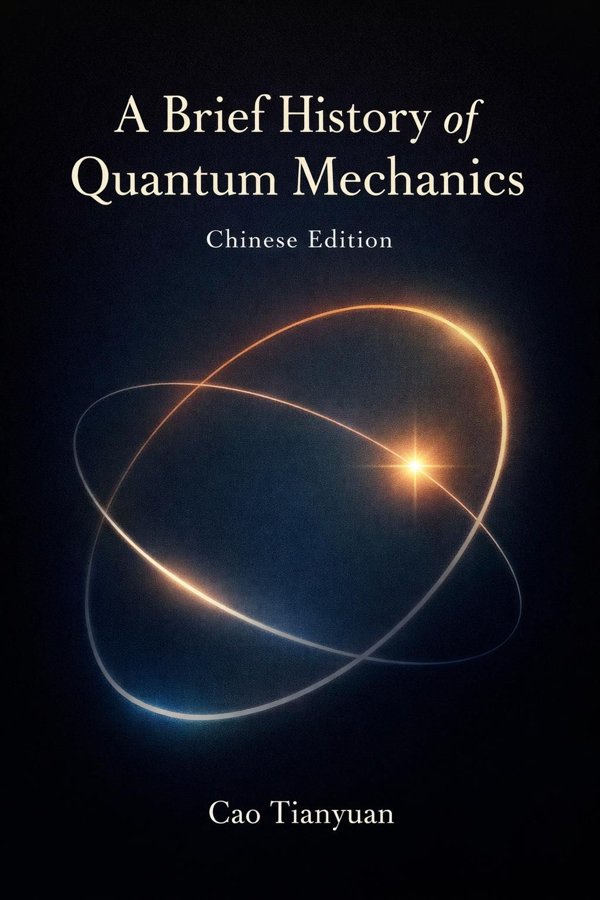
A Brief History of Quantum Mechanics (Chinese Edition)
by Cao Tianyuan
A popular science book that narrates the development of quantum mechanics from Planck’s quantum hypothesis to the ideas of Einstein, Bohr, Heisenberg, and Schrödinger. Written in a lively and accessible style, it transforms complex scientific concepts into engaging stories, allowing readers to appreciate the passion and philosophy behind scientific exploration.
Key Takeaways
- 1The Birth of the Quantum: From Planck’s Hypothesis to Einstein’s Light Quanta — The story begins at the turn of the 20th century. Classical physics was triumphant yet troubled. The laws of thermodynam…
- 2Bohr’s Atom and de Broglie’s Waves: The Quantum World Takes Shape — When Niels Bohr introduced his atomic model in 1913, he combined daring imagination with empirical pragmatism. He took R…
- 3From Heisenberg to Schrödinger: The Mathematics of Mystery
 10 min read
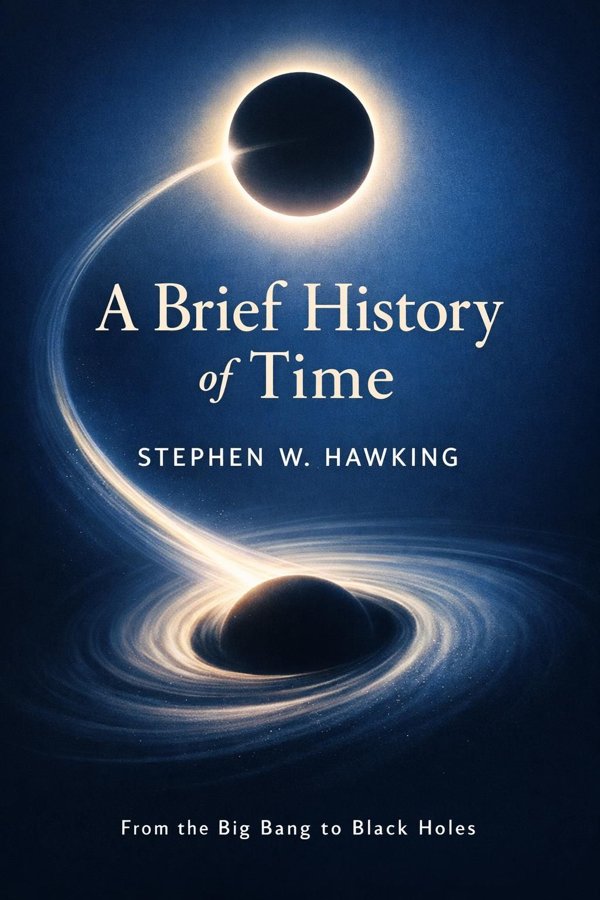
A Brief History of Time: From the Big Bang to Black Holes
by Stephen W. Hawking
A landmark work of popular science, this book explores fundamental questions about the universe, including the nature of time, black holes, the Big Bang, and the search for a unified theory. Written in accessible language, it brings complex cosmological concepts to a general audience.
Key Takeaways
- 1The Universe as We See It — If you could travel back through time, what you would witness is not only the evolution of stars but also of ideas. Anci…
- 2Space and Time — We cannot discuss the universe without confronting space and time—the very fabric of existence. Einstein’s theory of rel…
- 3The Expanding Universe
 10 min read
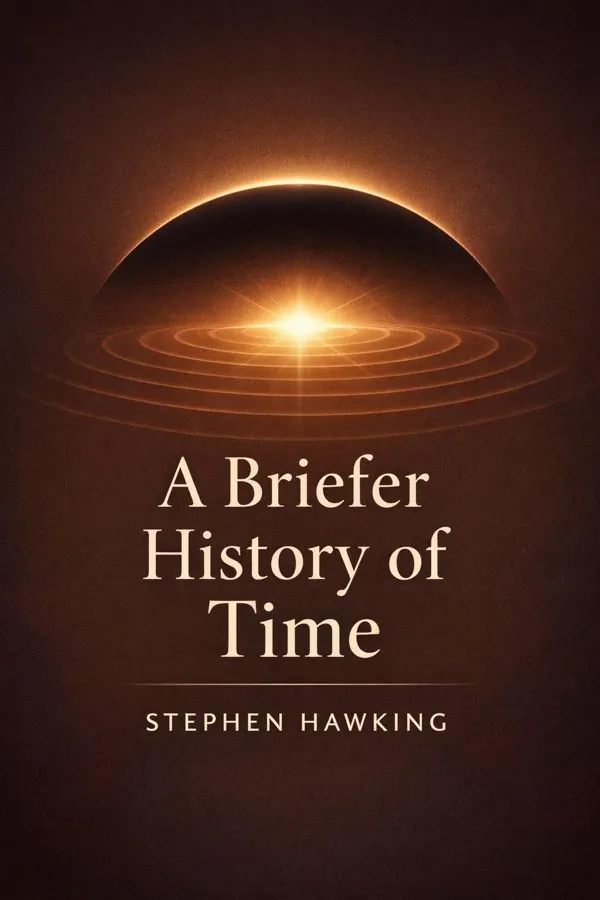
A Briefer History of Time
by Stephen Hawking
A Briefer History of Time is a concise and updated version of Stephen Hawking’s classic work, co-authored with Leonard Mlodinow. It presents complex concepts in cosmology—such as the Big Bang, black holes, quantum mechanics, and the nature of time—in a more accessible and illustrated format for general readers. The book aims to explain the fundamental laws governing the universe and humanity’s place within it, using clear language and engaging examples.
Key Takeaways
- 1From Ancient Cosmos to Modern Science — The story of cosmology begins long before telescopes or equations. For most of human history, we imagined ourselves at t…
- 2Space, Time, and the Relativity of Reality — Our intuition tells us that time ticks the same for all observers and that space exists independently of what moves thro…
- 3The Expanding Universe and the Big Bang
 10 min read
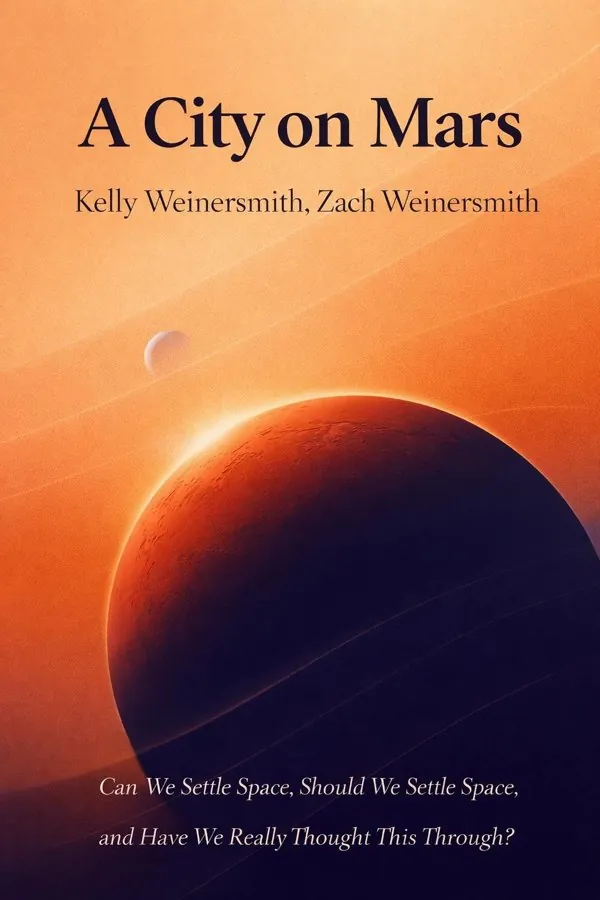
A City on Mars: Can We Settle Space, Should We Settle Space, and Have We Really Thought This Through?
by Kelly Weinersmith, Zach Weinersmith
A City on Mars explores the scientific, ethical, and practical challenges of human settlement beyond Earth. The authors, Kelly and Zach Weinersmith, combine humor and research to examine whether humanity is ready for life on Mars or other celestial bodies, addressing issues of biology, law, sustainability, and social organization in space colonization.
Key Takeaways
- 1Historical Context of Space Settlement — When we trace the story of space colonization, we meet a timeline woven from imagination, ideology, and aspiration. The …
- 2Physical and Biological Challenges — As a biologist, I couldn’t help starting with the human body, that fragile, gravity-trained system that evolved under on…
- 3Engineering and Resource Constraints
 10 min read
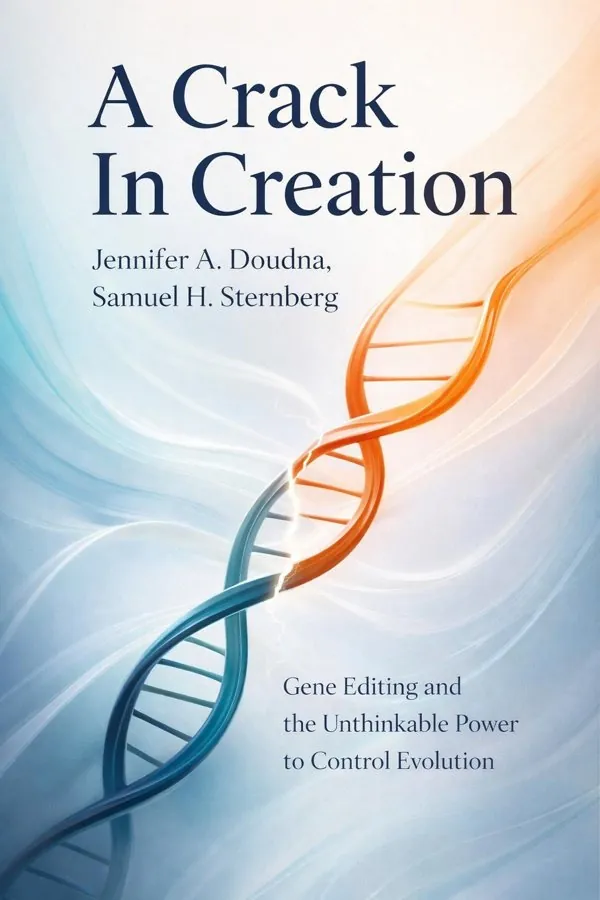
A Crack In Creation: Gene Editing and the Unthinkable Power to Control Evolution
by Jennifer A. Doudna, Samuel H. Sternberg
A Crack in Creation explores the revolutionary discovery of CRISPR-Cas9, a gene-editing technology that allows scientists to rewrite the genetic code with unprecedented precision. Written by Jennifer Doudna, one of the inventors of CRISPR, and Samuel Sternberg, the book delves into the science behind gene editing, its potential to cure diseases, and the profound ethical questions it raises about controlling evolution itself.
Key Takeaways
- 1Early Research: The Enigma and Enlightenment of RNA — My scientific path began with RNA. At the time, we didn’t fully understand all the roles this molecule played in living …
- 2The Discovery of CRISPR: From Sequence to System — While studying bacterial genomes, we noticed curious repeating sequences—regular patterns interspersed with unique space…
- 3The Cas9 Mechanism: The Precision of a Molecular Scalpel
 10 min read
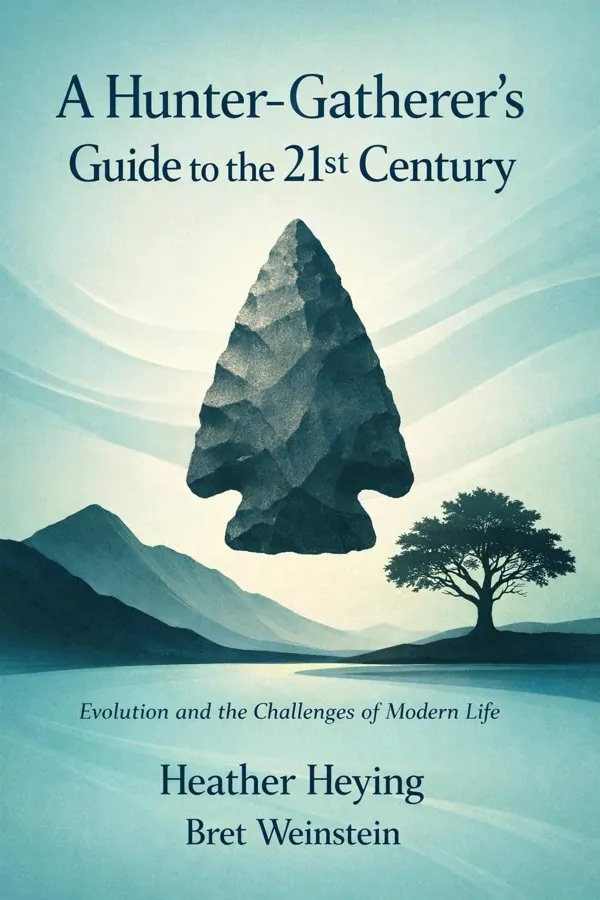
A Hunter-Gatherer's Guide to the 21st Century: Evolution and the Challenges of Modern Life
by Heather Heying, Bret Weinstein
A provocative exploration of the tension between our evolutionary history and the modern world, this book examines how ancient human instincts and biology interact with contemporary challenges such as diet, medicine, education, and social structures. The authors, evolutionary biologists Heather Heying and Bret Weinstein, propose that understanding our evolutionary past can help us navigate the complexities of modern life more effectively.
Key Takeaways
- 1Evolutionary Foundations — At the heart of everything lies evolution—the engine that shaped every human trait we carry today. To understand modern …
- 2Human Nature and Social Structures — Human relationships are the soil from which our species arose. In the ancestral world, survival depended on tribe—a smal…
- 3Sex Differences and Reproductive Strategies
 10 min read
A Life on Our Planet: My Witness Statement and a Vision for the Future
by David Attenborough
A Life on Our Planet is David Attenborough’s urgent witness statement about the state of Earth. Part memoir, part environmental diagnosis, and part practical roadmap, the book draws on a lifetime spent filming the natural world across every continent and ocean. Attenborough does not simply describe environmental decline in abstract terms. He shows how, over the course of his own life, wilderness has shrunk, biodiversity has collapsed, and humanity’s demand for land, energy, and resources has pushed the planet toward instability. That personal perspective gives the book unusual force: this is not theory from a distance, but testimony from someone who has seen the change unfold firsthand. What makes the book so powerful is its balance of warning and hope. Attenborough argues that human beings are not separate from nature but dependent on it, and that our future prosperity depends on restoring the living systems we have damaged. He also offers a clear vision for renewal, from rewilding land and protecting oceans to stabilizing population growth and shifting food systems. For readers seeking a concise but profound understanding of the environmental crisis, this book is both a reckoning and a call to action from one of the world’s most trusted natural historians.
Key Takeaways
- 1A lifetime reveals planetary decline — The most unsettling truth in this book is that environmental collapse is not a distant possibility; it is a change that …
- 2Human prosperity depends on biodiversity — A central insight of the book is that biodiversity is not a luxury for nature lovers; it is the operating system of life…
- 3The illusion of endless growth — One of the book’s sharpest warnings is that humanity has behaved as if the planet were limitless. Attenborough shows how…
 10 min read
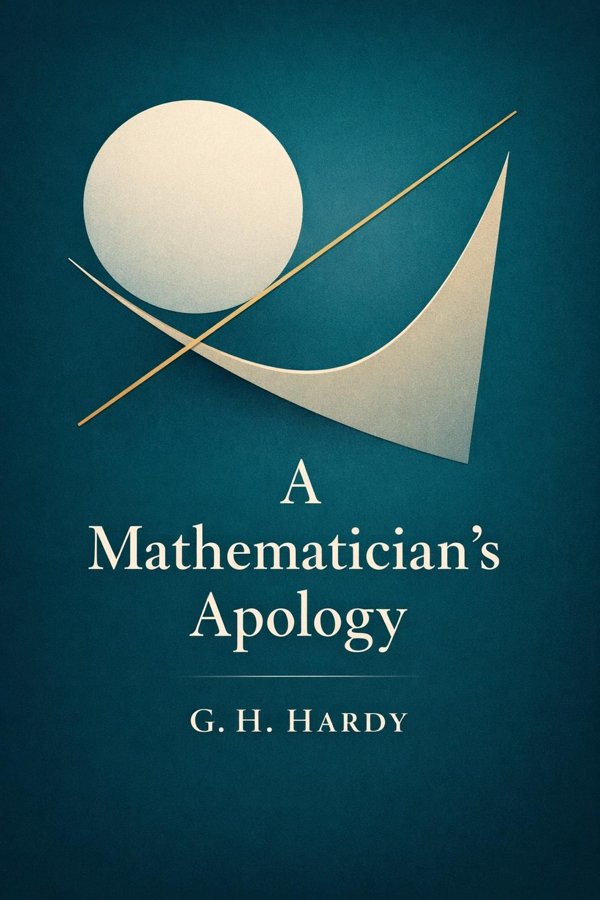
A Mathematician’s Apology
by G. H. Hardy
A Mathematician’s Apology is a classic essay by the British mathematician G. H. Hardy, first published in 1940. It offers a personal reflection on the aesthetics and purpose of mathematics, defending pure mathematics as a creative art form rather than a utilitarian pursuit. Hardy discusses the beauty of mathematical thought, the motivations of mathematicians, and his own career, providing one of the most eloquent defenses of intellectual creativity in the sciences.
Key Takeaways
- 1Pure vs. Applied Mathematics: The Defense of the Abstract — From the beginning of my career, I was confronted with a question that has plagued many mathematicians: of what use is y…
- 2The Aesthetic of Mathematics: Beauty, Truth, and Creation — When I claim that mathematics is a creative art, I do not speak metaphorically. A mathematician, like a poet, must choos…
- 3The Motives and Morality of the Mathematician
 10 min read
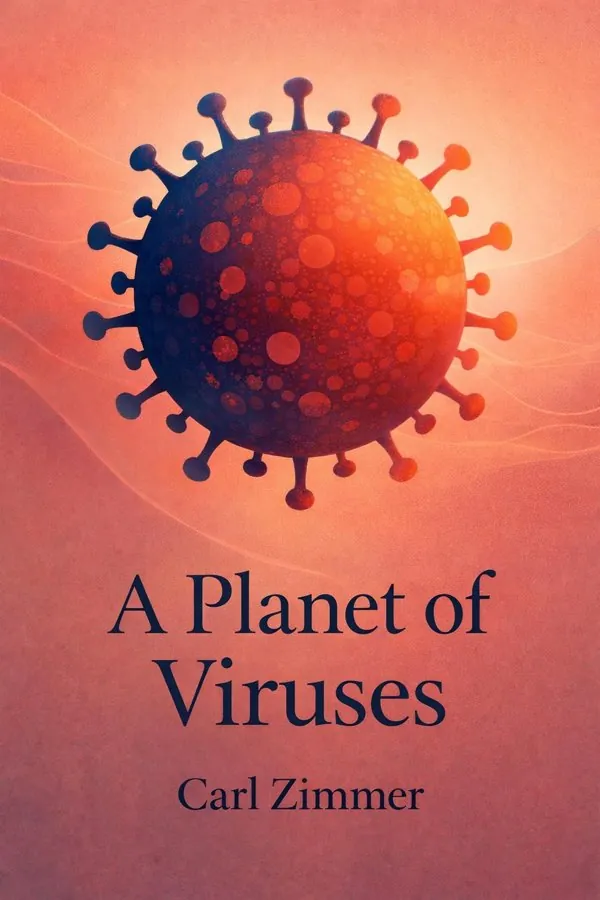
A Planet of Viruses
by Carl Zimmer
A Planet of Viruses explores the hidden world of viruses and their profound influence on life, evolution, and human history. Carl Zimmer reveals how viruses shape ecosystems, drive genetic innovation, and challenge our understanding of what it means to be alive. Through engaging stories and scientific insight, the book illuminates the role of viruses in everything from the common cold to global pandemics.
Key Takeaways
- 1Ancient Origins — When tracing the lineage of viruses, we venture beyond the timeline of human disease into the origin of life itself. Vir…
- 2The Common Cold — The ordinary rhinovirus, responsible for so many sniffles, illustrates the complexity of viral adaptation. These viruses…
- 3Influenza
 10 min read
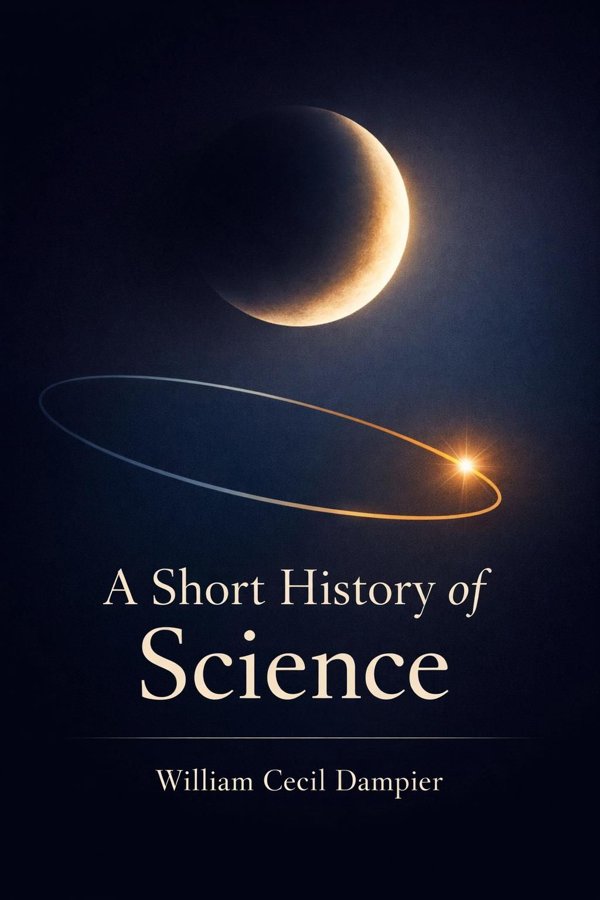
A Short History of Science
by William Cecil Dampier
This book provides a concise overview of the development of scientific thought and discovery from ancient times to the early twentieth century. Dampier traces the evolution of key ideas in physics, chemistry, biology, and astronomy, showing how they shaped modern science. Written in accessible language, it serves as both an introduction and a historical reflection on the progress of human understanding.
Key Takeaways
- 1Ancient Origins: The Dawn of Scientific Thought — The story of science begins long before the Greeks, in the lands where written history itself was born—Mesopotamia and E…
- 2Greek Science and Philosophy: Aristotle, Archimedes, and the Methods of Reason — No account of early science can omit Aristotle, whose system of classification and logical reasoning dominated thought f…
- 3Science in the Middle Ages: Preservation and Transmission
Want the full summary?
Get instant access to this book summary and 500K+ more with Fizz Moment.
Get Free SummaryAvailable on App Store • Free to download
About This List
The best science writers turn complex research into page-turning stories. Physics, biology, evolution — no PhD required, just curiosity.
This list features 15 carefully selected books. With FizzRead, you can read AI-powered summaries of each book in just 15 minutes. Get the key takeaways and start applying the insights immediately.
Ready to start reading?
Get instant access to all 15 book summaries and 500K+ more with FizzRead.