
Best Philosophy Books — Timeless Wisdom for Modern Life
From ancient Stoics to modern existentialists, these philosophy books tackle the biggest questions. Timeless wisdom that remains shockingly relevant.

 10 min read
Meditations
by Marcus Aurelius
What does it mean to stay calm, just, and fully human in a world full of pressure, conflict, ego, and loss? That is the enduring question at the heart of Meditations, the private journal of Roman emperor Marcus Aurelius. Written in Greek and never intended for publication, these reflections are not polished philosophy lectures. They are personal reminders from one of the most powerful men in the world trying to govern not only an empire, but also his own mind. That tension is exactly why this book still matters. Meditations remains one of the clearest guides to Stoic philosophy because it speaks directly to everyday struggles: dealing with difficult people, accepting change, resisting vanity, and acting with integrity when no one is watching. Marcus Aurelius is remembered as both a Roman emperor and a Stoic philosopher, a rare figure often described as a philosopher-king. His reflections on virtue, discipline, mortality, and inner peace have influenced readers for centuries. If you want practical wisdom rather than abstract theory, Meditations offers a deeply human blueprint for living with clarity, resilience, and moral purpose.
Key Takeaways
- 1Book I: Lessons from Those Who Shaped Me — The opening book of Meditations is an extraordinary act of gratitude. Instead of launching into abstract arguments, Marc…
- 2Book II: Accepting Fate and Living Rationally — Book II opens with one of the most quoted passages in Stoic philosophy: a morning reminder that we will meet interfering…
- 3Book III: Integrity Beyond Fame — In Book III, Marcus Aurelius turns his attention to time, mortality, and the danger of living for approval. He reminds h…
 10 min read
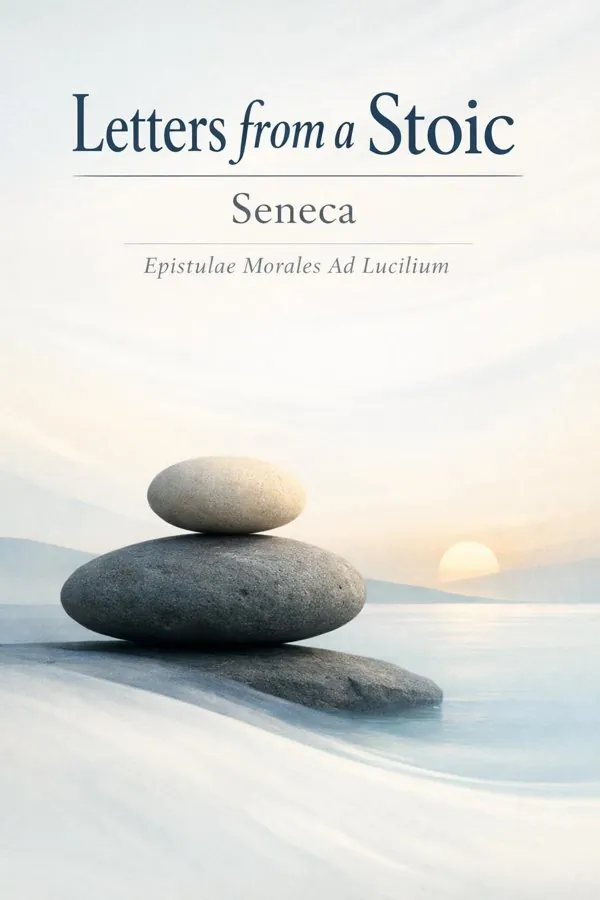
Letters from a Stoic
by Seneca
What if peace of mind had less to do with controlling the world and more to do with mastering yourself? That is the enduring promise of Letters from a Stoic, Seneca’s timeless collection of moral letters to his friend Lucilius. Written nearly two thousand years ago, these letters still feel startlingly modern because they confront the same problems we face today: stress, distraction, ambition, fear of loss, and the pressure to live up to other people’s expectations. Rather than offering abstract theory, Seneca turns Stoicism into practical advice for ordinary living. He writes about how to use time wisely, how to face death without panic, how to handle wealth without becoming its servant, and how to build a life anchored in character instead of circumstance. Seneca’s authority comes not only from philosophical insight but from experience. He was a Roman Stoic philosopher, statesman, and dramatist who lived close to power and instability, which gives his reflections unusual force. Letters from a Stoic matters because it shows that wisdom is not a luxury for scholars—it is daily training for anyone who wants to live with clarity, courage, and inner freedom.
Key Takeaways
- 1Virtue: The Only Good — Seneca’s central claim is radical but liberating: the only true good is virtue. Wealth, status, health, comfort, and pra…
- 2The Fleeting Nature of Time and the Art of Using Life Well — Few themes in Seneca’s letters feel more urgent than his warning about wasted time. He argues that people guard their mo…
- 3Mastering the Passions: The Discipline of Inner Control — Seneca sees destructive emotions—especially anger, fear, anxiety, and uncontrolled desire—not as unavoidable rulers of t…
 10 min read
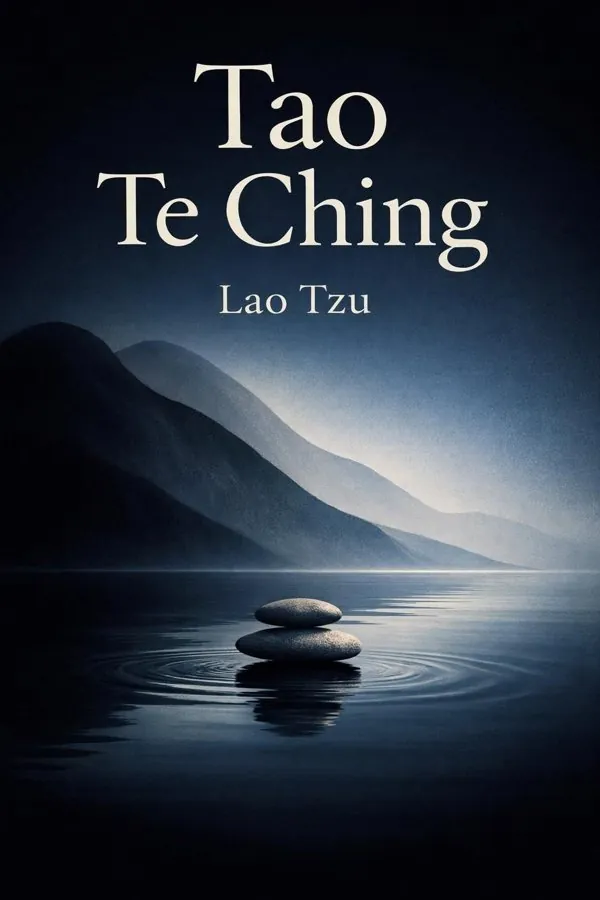
Tao Te Ching
by Lao Tzu
Few books have shaped spiritual thought, leadership, and personal reflection as deeply as the Tao Te Ching. Though brief in length, this ancient classic opens a surprisingly vast way of seeing life: one that values stillness over strain, humility over ego, and alignment over force. At a time when modern life often rewards speed, control, and constant self-assertion, the Tao Te Ching offers a radically different path. It suggests that the most effective way to live is not by pushing harder, but by moving in harmony with the deeper patterns of existence. Attributed to Lao Tzu, the revered sage traditionally associated with the founding of Daoism, this text has endured for more than two millennia because it speaks to timeless human struggles: how to lead without dominating, act without exhausting yourself, and find peace in a world of change. Divided into reflections on the Tao, or the Way, and Te, often translated as virtue or inner power, the book blends poetic paradox with practical wisdom. Its teachings on non-action, simplicity, and natural balance continue to influence philosophy, politics, spirituality, and self-development around the world.
Key Takeaways
- 1Introduction to the Tao — The Tao is the starting point of the entire book, yet Lao Tzu immediately tells us it cannot be fully captured in langua…
- 2The Nature of the Tao — Lao Tzu describes the Tao through paradox because ordinary logic cannot contain it. It is empty, yet never used up. It i…
- 3Wu Wei (Non-Action) — Wu wei is one of the most misunderstood ideas in the Tao Te Ching. It does not mean laziness, passivity, or refusing to …
 10 min read
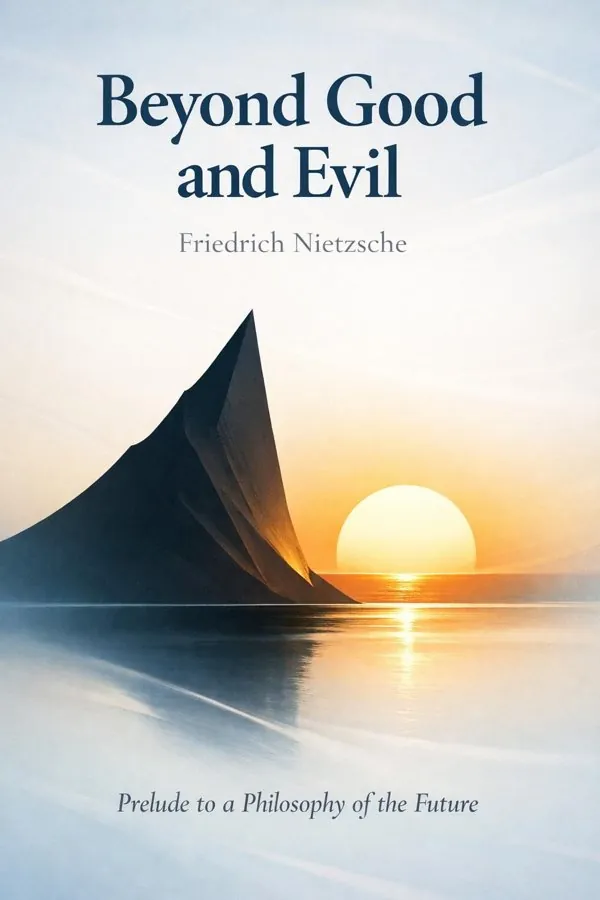
Beyond Good and Evil
by Friedrich Nietzsche
Beyond Good and Evil is a philosophical work by Friedrich Nietzsche, first published in 1886. It challenges traditional moral values and explores the foundations of morality, calling for a reevaluation of all values. Nietzsche critiques the assumptions of past philosophers and proposes a philosophy that transcends conventional notions of good and evil. The book is considered one of Nietzsche’s most important works and a cornerstone of modern philosophy.
Key Takeaways
- 1Part I – On the Prejudices of Philosophers — Here I begin by exposing the secret assumptions of philosophers who have claimed to seek truth. They speak of ‘reason,’ …
- 2Part II – The Free Spirit — What is the free spirit? It is the one who has unlearned to fear truth, who can live with uncertainty and still affirm l…
- 3Part III – The Religious Nature
 10 min read
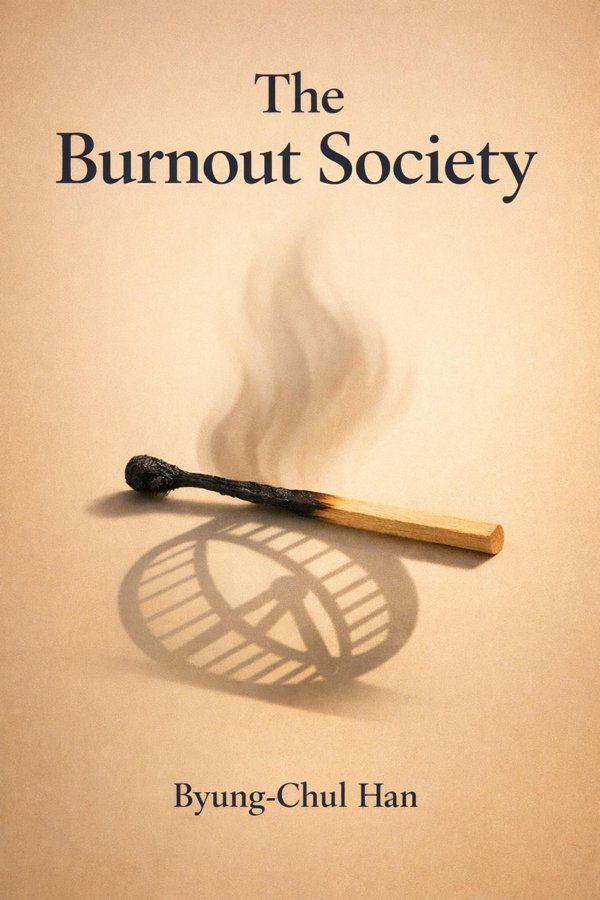
The Burnout Society
by Byung-Chul Han
In "The Burnout Society," philosopher Byung-Chul Han explores the psychological and social consequences of neoliberal performance culture. He argues that contemporary society is no longer dominated by discipline and prohibition but by an excess of positive motivation and self-optimization, leading to exhaustion, depression, and burnout. Han describes how the modern subject exploits itself under the illusion of freedom while remaining bound by the imperatives of productivity.
Key Takeaways
- 1The Transition from Negativity to Positivity — I begin by contrasting two epochs: the former disciplinary society structured by prohibitions, and the present performan…
- 2The Achievement Subject — The figure that emerges from this transformation is what I call the achievement subject. Unlike the obedient subject of …
- 3Psychological Consequences
 10 min read
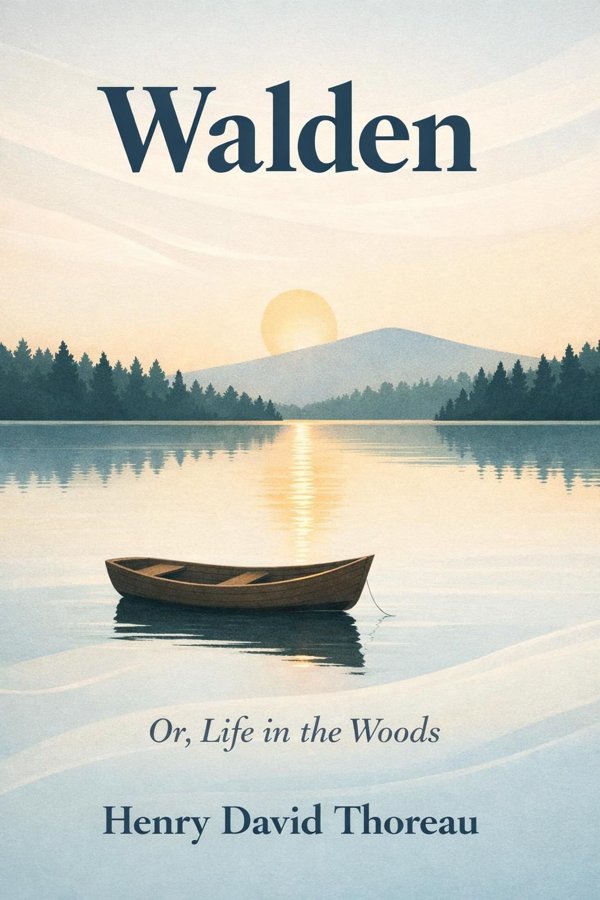
Walden
by Henry David Thoreau
Walden es una obra de reflexión filosófica y naturalista escrita por Henry David Thoreau. Publicada por primera vez en 1854, el libro narra la experiencia del autor viviendo durante dos años en una cabaña junto al lago Walden, en Concord, Massachusetts. A través de sus observaciones sobre la naturaleza, la autosuficiencia y la simplicidad, Thoreau explora la relación entre el individuo y la sociedad, proponiendo una vida más consciente y en armonía con el entorno.
Key Takeaways
- 1Living Deliberately: The Meaning of the Experiment — I went to the woods because I wished to live deliberately, to confront only the essential facts of life and see if I cou…
- 2Economy and the Measure of Wealth — The first and longest chapter I wrote was called 'Economy.' Economy is not merely the management of money but the govern…
- 3Solitude, Companionship, and the Inner Life
 10 min read
Being and Nothingness
by Jean-Paul Sartre
Originally published in French as 'L'Être et le Néant' in 1943, 'Being and Nothingness' is Jean-Paul Sartre's seminal work of existentialist philosophy. This dense and challenging text explores the nature of consciousness, freedom, and human existence through phenomenology. Sartre examines concepts such as being-for-itself, being-in-itself, and bad faith, laying the foundation for existentialist thought and influencing generations of philosophers and writers.
Key Takeaways
- 1Part I – The Problem of Nothingness — Let us begin with being itself. Objects in the world—stones, chairs, trees—exist fully, indifferently, in themselves. Th…
- 2The Nature of Consciousness — Every act of consciousness is consciousness of something—that is Husserl’s discovery, and I build upon it. Intentionalit…
- 3Being-for-Itself and Freedom
 10 min read
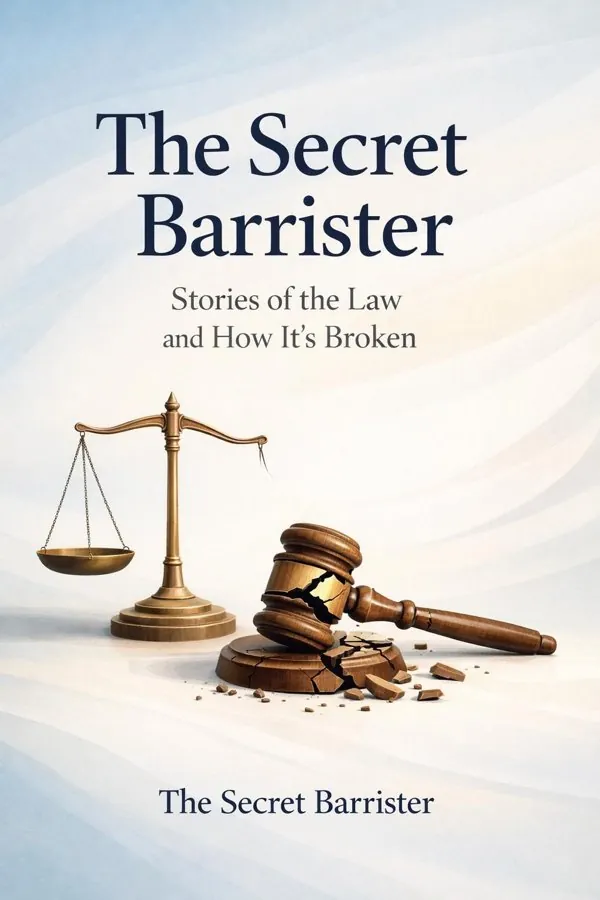
The Secret Teachings of All Ages
by Manly P. Hall
An anonymous barrister offers a darkly comic and deeply moving first-hand account of life in the criminal justice system of England and Wales. The book exposes the systemic failures, underfunding, and bureaucratic chaos that undermine justice, showing how both victims and defendants are often failed by the system meant to protect them.
Key Takeaways
- 1The Ideal of Justice — Every aspiring lawyer begins with a romantic vision of justice. We memorise the principles: that every individual is equ…
- 2The Journey Through the Criminal Courts — For those who have never navigated the criminal courts, the process can appear labyrinthine and surreal. A case begins w…
- 3The Role of the Barrister
 10 min read
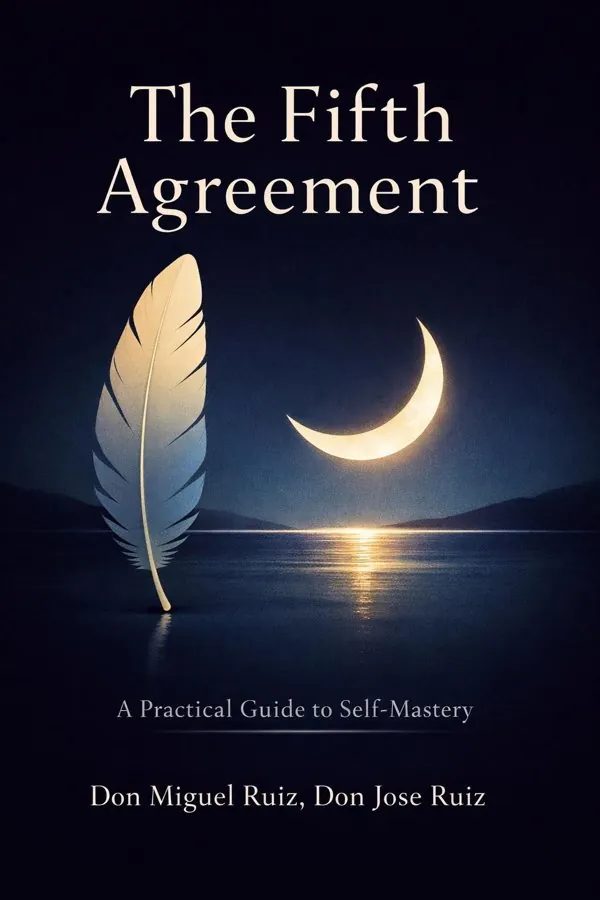
The Fifth Agreement
by Don Miguel Ruiz
The Fifth Agreement es una guía espiritual que amplía las enseñanzas de 'Los Cuatro Acuerdos'. Don Miguel Ruiz y su hijo Don José Ruiz invitan al lector a profundizar en la sabiduría tolteca, explorando cómo la percepción y la verdad personal pueden liberar la mente de creencias limitantes. El quinto acuerdo —sé escéptico, pero aprende a escuchar— ofrece una nueva perspectiva para alcanzar la libertad y la autenticidad.
Key Takeaways
- 1Review of the Four Agreements and the Foundation of Self-Mastery — When we first introduced 'The Four Agreements,' they served as the pillars of a new way of living—simple sentences that …
- 2The Fifth Agreement: Be Skeptical, but Learn to Listen — The Fifth Agreement is a bridge between knowledge and wisdom. 'Be skeptical' means you must question everything you hear…
- 3Perception, The Dream, and the Nature of Truth
 10 min read
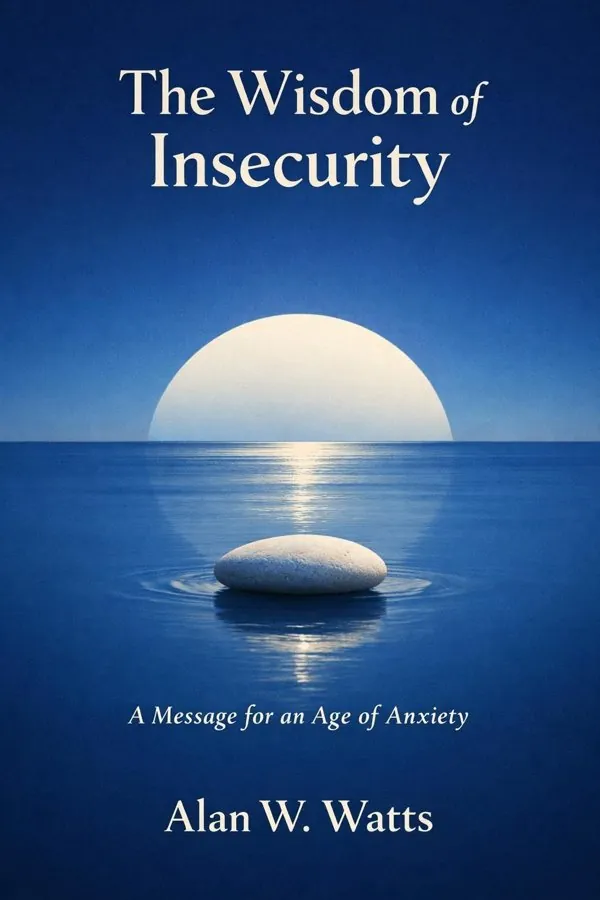
The Wisdom of Insecurity
by Alan Watts
In this philosophical work, Alan Watts explores the paradox of seeking security in an inherently insecure world. He argues that true peace and fulfillment come not from clinging to certainty or control, but from embracing the present moment and the impermanence of life. Drawing on insights from Eastern philosophy and modern psychology, Watts offers a timeless reflection on how to live fully in an age of anxiety.
Key Takeaways
- 1The Problem of Security — Why is it that our endless pursuit of safety leaves us feeling more vulnerable? I open this inquiry by confronting the i…
- 2The Illusion of Permanence — Our suffering often arises from a simple refusal—to accept impermanence. Love, relationships, success, and even spiritua…
- 3The Nature of the Self
 10 min read
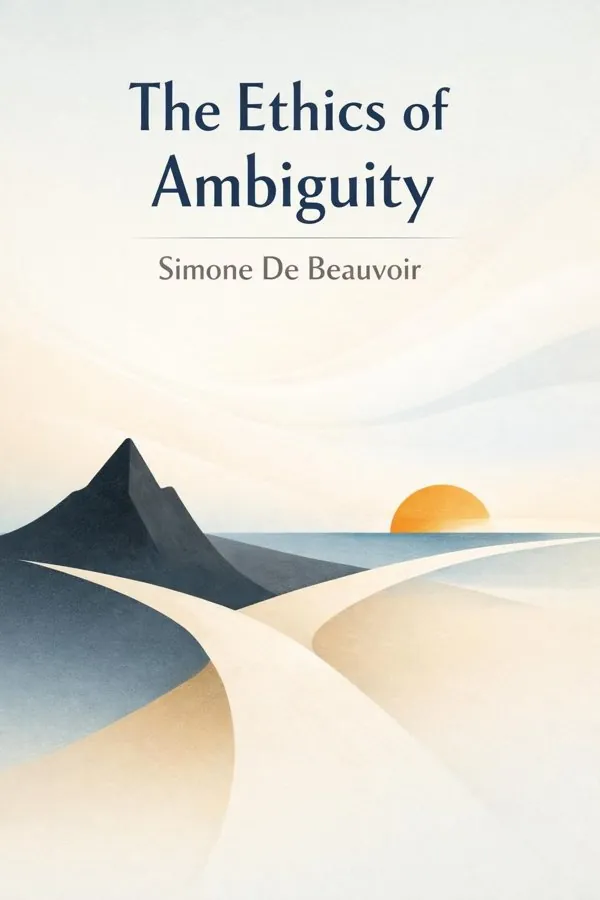
The Ethics of Ambiguity
by Simone de Beauvoir
Originally published in 1947, this philosophical essay by Simone de Beauvoir explores human freedom, responsibility, and existential ethics. De Beauvoir develops a moral philosophy grounded in the ambiguity of the human condition, where individual freedom must coexist with that of others. The work stands as a major contribution to existentialist philosophy and twentieth-century moral thought.
Key Takeaways
- 1Part I – Ambiguity and Freedom — To understand freedom, we must begin from ambiguity itself. Human beings are not pure consciousness nor mere matter; we …
- 2Part I – The Human Condition — When consciousness awakens to itself, it feels the pull between the desire for absolute freedom and the weight of the wo…
- 3Part II – Freedom and Others
 10 min read
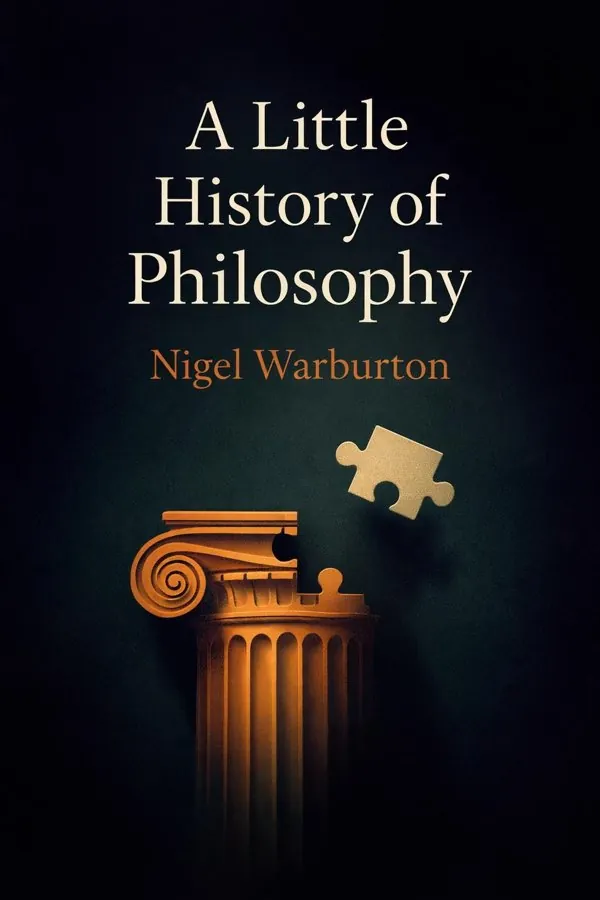
A Little History of Philosophy
by Nigel Warburton
A Little History of Philosophy offers an accessible and engaging introduction to the most influential philosophical ideas from antiquity to the present day. Nigel Warburton presents thinkers such as Socrates, Descartes, Kant, and Nietzsche, explaining their key concepts and showing how their ideas continue to shape our understanding of the modern world.
Key Takeaways
- 1Socrates and the Examined Life — Our journey properly begins with Socrates, the old gadfly of Athens, who refused to write a single book yet changed the …
- 2Plato’s Theory of Forms — After Socrates came his student Plato, who transformed the master’s method of questioning into a grand philosophical sys…
- 3Aristotle’s Empirical Approach
 10 min read
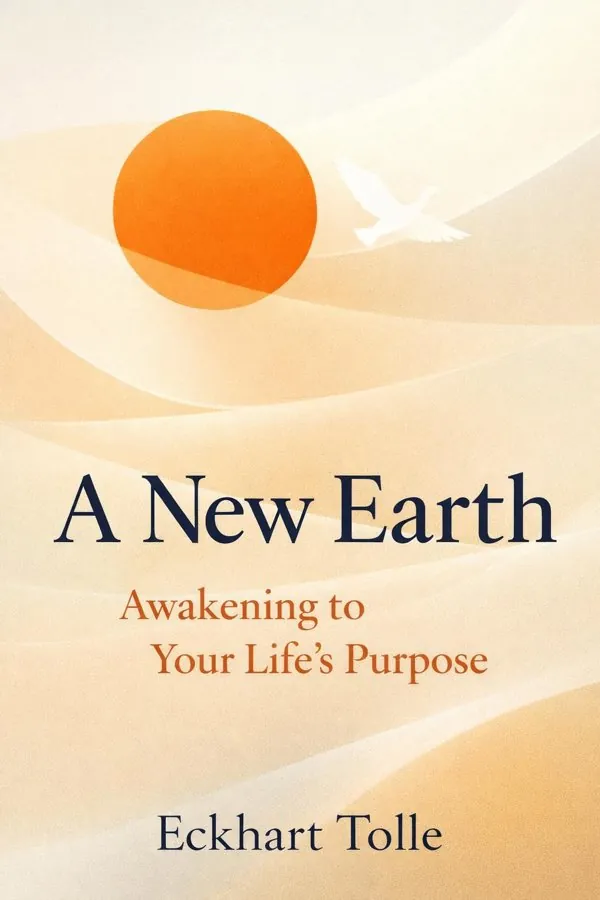
A New Earth
by Eckhart Tolle
A New Earth explores the concept of ego and consciousness, guiding readers toward spiritual awakening and a deeper sense of purpose. Eckhart Tolle presents practical insights on transcending the ego-based state of mind to achieve inner peace and collective transformation.
Key Takeaways
- 1The Flowering of Human Consciousness — Every species experiences certain thresholds of evolution, moments where gradual development gives way to sudden transfo…
- 2Ego: The Current State of Humanity — Look around and you will see the ego everywhere—in the hunger for status, in the anger at being contradicted, in the fea…
- 3The Role of the Pain-Body
 10 min read
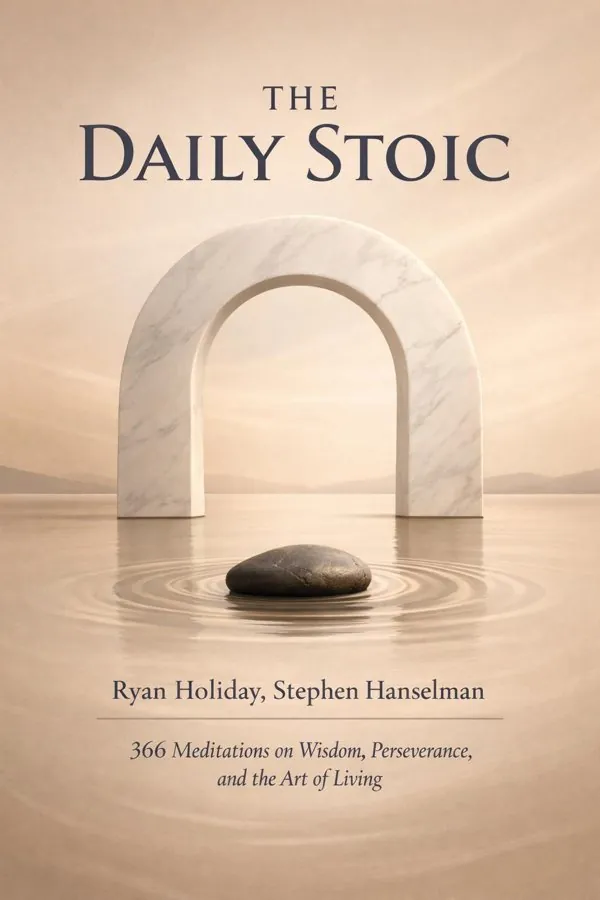
The Daily Stoic
by Ryan Holiday, Stephen Hanselman
A collection of 366 daily meditations inspired by Stoic philosophy, drawing from the writings of Marcus Aurelius, Seneca, and Epictetus. Each entry offers a quote from a Stoic thinker followed by commentary and practical reflections on how to apply Stoic principles to modern life.
Key Takeaways
- 1Part I – The Discipline of Perception — When I speak of perception, I am not talking merely about sight but about interpretation—the lens through which we exper…
- 2Part II – The Discipline of Action — After learning to perceive the world rightly, you must learn to live in it rightly. Stoicism is no retreat into contempl…
- 3Part III – The Discipline of Will
 10 min read
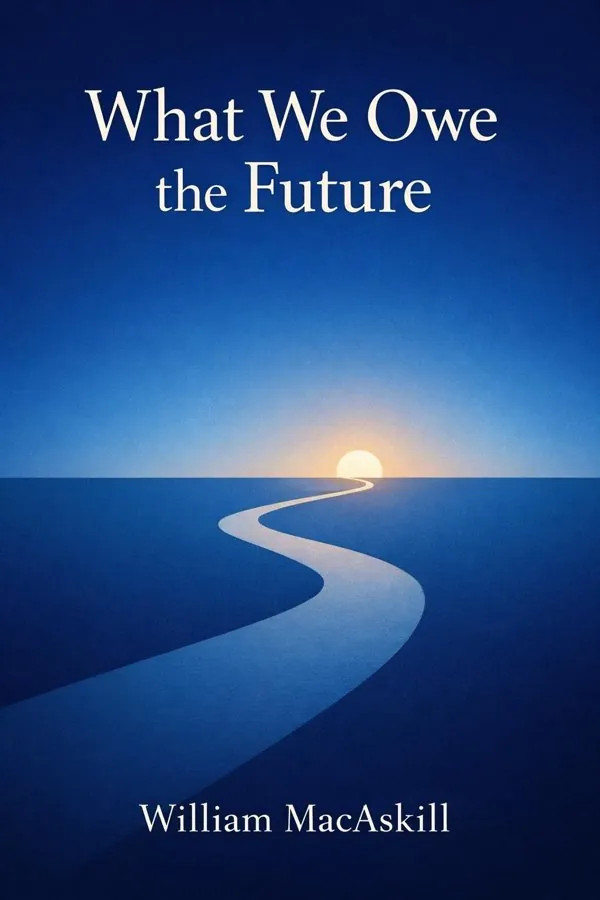
What We Owe the Future
by William MacAskill
In this influential work, philosopher William MacAskill explores the moral importance of shaping the long-term future of humanity. He argues that our actions today can profoundly affect countless generations to come, and that we have a moral responsibility to ensure a flourishing future. The book combines ethical reasoning, economics, and practical philosophy to advocate for longtermism — the idea that positively influencing the distant future is a key moral priority of our time.
Key Takeaways
- 1Introduction to Longtermism — The foundational idea of longtermism emerges from a simple yet radical claim: future people matter morally just as much …
- 2The Scale of the Future — When people grasp the enormity of time that may stretch ahead of us, the moral stakes of the future become almost incomp…
- 3Moral Importance of the Long Term
Want the full summary?
Get instant access to this book summary and 500K+ more with Fizz Moment.
Get Free SummaryAvailable on App Store • Free to download
About This List
From ancient Stoics to modern existentialists, these philosophy books tackle the biggest questions. Timeless wisdom that remains shockingly relevant.
This list features 15 carefully selected books. With FizzRead, you can read AI-powered summaries of each book in just 15 minutes. Get the key takeaways and start applying the insights immediately.
Ready to start reading?
Get instant access to all 15 book summaries and 500K+ more with FizzRead.