

Steven Pinker Books
Christopher Alexander (1936–2022) was a British-American architect and design theorist known for his influential works on architecture and urban design. He taught at the University of California, Berkeley, and authored seminal books such as A Pattern Language and The Timeless Way of Building, which have profoundly impacted architecture, software design, and systems thinking.
Known for: The Better Angels of Our Nature, Rationality: What It Is, Why It Seems Scarce, Why It Matters, Enlightenment Now, Enlightenment Now: The Case for Reason, Science, Humanism, and Progress, How the Mind Works, The Better Angels of Our Nature: Why Violence Has Declined, The Blank Slate: The Modern Denial of Human Nature, The Language Instinct: How the Mind Creates Language, The Sense of Style: The Thinking Person’s Guide to Writing in the 21st Century, The Stuff of Thought: Language as a Window into Human Nature, When Everyone Knows That Everyone Knows: Honest Signaling and the Foundations of Social Life, When Everyone Knows That Everyone Knows…
Books by Steven Pinker

The Better Angels of Our Nature
The Nature of Order is a four-volume work by architect and design theorist Christopher Alexander, exploring the fundamental principles of architecture, design, and the nature of living structure. Acro...
Rationality: What It Is, Why It Seems Scarce, Why It Matters
Why do smart people believe false things, make bad decisions, and fall for arguments that collapse under scrutiny? In Rationality, Steven Pinker tackles one of the most urgent questions of modern life...

Enlightenment Now
The Power of Now es una guía espiritual que invita al lector a descubrir la importancia de vivir plenamente en el momento presente. Eckhart Tolle explora cómo la mente y el ego crean sufrimiento y cóm...

Enlightenment Now: The Case for Reason, Science, Humanism, and Progress
Enlightenment Now is a comprehensive defense of Enlightenment values—reason, science, humanism, and progress—arguing that these principles have led to unprecedented improvements in human life. Steven ...
How the Mind Works
In this landmark work, cognitive scientist Steven Pinker explores the nature of human thought and behavior through the lens of evolutionary psychology and cognitive science. He examines how the mind e...

The Better Angels of Our Nature: Why Violence Has Declined
In this landmark work, cognitive scientist Steven Pinker argues that violence has been in decline over long stretches of history and that we are living in the most peaceful era of our species' existen...

The Blank Slate: The Modern Denial of Human Nature
In this influential work, cognitive scientist Steven Pinker challenges the notion that humans are born as blank slates, shaped entirely by environment and culture. Drawing on research from psychology,...
The Language Instinct: How the Mind Creates Language
In this groundbreaking work, cognitive scientist Steven Pinker argues that humans are born with an innate capacity for language. Drawing on research from linguistics, psychology, and evolutionary biol...
The Sense of Style: The Thinking Person’s Guide to Writing in the 21st Century
In this guide, renowned cognitive scientist and linguist Steven Pinker explores how good writing works and why it matters. Blending insights from grammar, clarity, and human psychology, Pinker demysti...
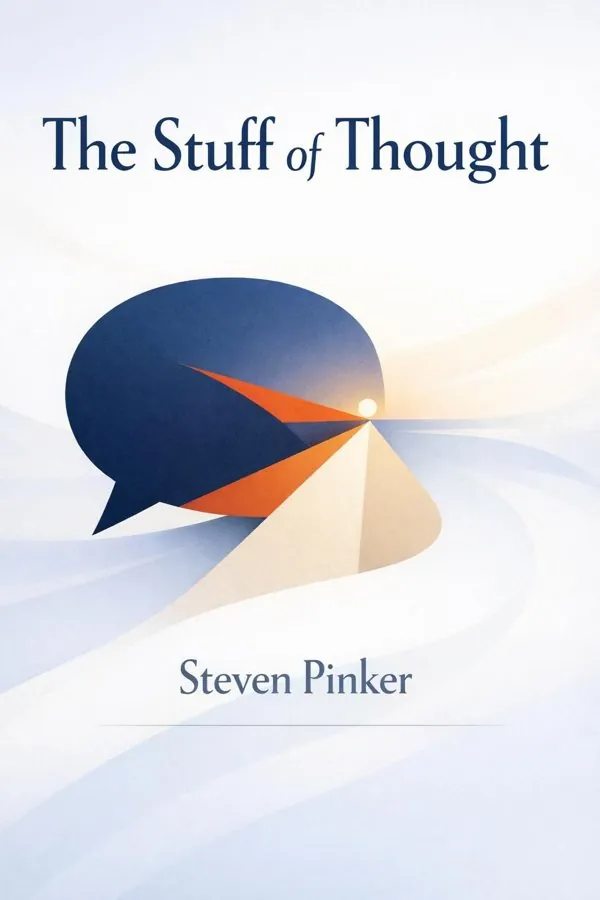
The Stuff of Thought: Language as a Window into Human Nature
In this book, cognitive scientist Steven Pinker explores how the words we use reveal the inner workings of our minds. Through examples ranging from everyday speech to taboo language, Pinker demonstrat...

When Everyone Knows That Everyone Knows: Honest Signaling and the Foundations of Social Life
This essay by cognitive scientist Steven Pinker explores the concept of common knowledge—situations in which everyone knows that everyone knows something—and its profound implications for human cooper...

When Everyone Knows That Everyone Knows…
A cognitive scientist explores the concept of "common knowledge"—the recursive awareness that everyone knows that everyone else knows—and its profound impact on human social life. The book applies gam...
Key Insights from Steven Pinker
Wholeness and the Fifteen Properties of Living Structure
At the core of my inquiry is what I call *wholeness*. Wholeness is not a metaphor or a mystical term; it is a structural and measurable quality of the world. You can perceive it directly whenever something feels deeply alive. Imagine a natural pond surrounded by flowers—there is a sense of coherence...
From The Better Angels of Our Nature
The Generative Process: How Living Structure Emerges
Recognizing wholeness is only the beginning. The deeper question is: how does wholeness come into being? Through years of observation I came to understand that living structure cannot be produced by design templates or master plans. It grows through a *generative process*, a sequence of small, adapt...
From The Better Angels of Our Nature
Rationality Is More Than Intelligence
A person can be brilliant and still reason badly. That is one of Steven Pinker’s most important and unsettling points. Intelligence helps people process information quickly, spot patterns, and master complex tasks, but rationality is something different: the ability to use logic, probability, and ev...
From Rationality: What It Is, Why It Seems Scarce, Why It Matters
Reason Works Through Shared Rules
Arguments become productive only when people accept rules larger than themselves. Pinker emphasizes that rationality is not merely a private mental virtue; it is also a social achievement. Logic, evidence, probability, and standards of argument allow people with different backgrounds and interests t...
From Rationality: What It Is, Why It Seems Scarce, Why It Matters
Probability Helps Us Think Under Uncertainty
Most bad judgments are not failures of sincerity but failures of statistical intuition. Pinker argues that modern life constantly confronts us with uncertainty, and rationality requires more than yes-or-no thinking. We need probabilistic reasoning: the ability to estimate likelihoods, compare risks,...
From Rationality: What It Is, Why It Seems Scarce, Why It Matters
Bias Thrives When Ego Leads
People rarely think in a vacuum; they think in defense of themselves. Pinker explores how bias often arises not from broken minds but from minds serving social and emotional goals. We want to protect our identities, justify our past choices, maintain status, and stay loyal to our group. These motive...
From Rationality: What It Is, Why It Seems Scarce, Why It Matters
About Steven Pinker
Christopher Alexander (1936–2022) was a British-American architect and design theorist known for his influential works on architecture and urban design. He taught at the University of California, Berkeley, and authored seminal books such as A Pattern Language and The Timeless Way of Building, which ...
Read more
Christopher Alexander (1936–2022) was a British-American architect and design theorist known for his influential works on architecture and urban design. He taught at the University of California, Berkeley, and authored seminal books such as A Pattern Language and The Timeless Way of Building, which ...
Christopher Alexander (1936–2022) was a British-American architect and design theorist known for his influential works on architecture and urban design. He taught at the University of California, Berkeley, and authored seminal books such as A Pattern Language and The Timeless Way of Building, which have profoundly impacted architecture, software design, and systems thinking.


Frequently Asked Questions
Christopher Alexander (1936–2022) was a British-American architect and design theorist known for his influential works on architecture and urban design. He taught at the University of California, Berkeley, and authored seminal books such as A Pattern Language and The Timeless Way of Building, which have profoundly impacted architecture, software design, and systems thinking.
Read Steven Pinker's books in 15 minutes
Get AI-powered summaries with key insights from 12 books by Steven Pinker.