

Plato Books
Plato (c. 427–347 BCE) was an ancient Greek philosopher, a student of Socrates, and the teacher of Aristotle.
Known for: Meno, Apology, Gorgias, Phaedo, Phaedrus, Plato: Complete Works, Symposium, The Republic, The Symposium, Timaeus
Books by Plato
Meno
What if the hardest part of becoming good is not effort, but knowing what goodness actually is? In Meno, one of Plato’s most famous early dialogues, this deceptively simple problem drives a sharp and ...
Apology
In this classic philosophical dialogue, Plato presents Socrates’ defense during his trial in 399 BCE, where he stands accused of impiety and corrupting the youth of Athens. Through Socrates’ eloquent ...
Gorgias
Taking the form of a dialogue among Socrates, Gorgias, Polus, and Callicles, Gorgias debates crucial questions about the nature of government, morality, and rhetoric. This vivid introduction to centra...
Phaedo
Phaedo is one of Plato’s most celebrated dialogues, recounting the final hours of Socrates as he discusses the immortality of the soul with his disciples. Through reasoned argument and philosophical r...
Phaedrus
Phaedrus is one of Plato’s dialogues in which Socrates and Phaedrus discuss the nature of love, the soul, and rhetoric. The work explores the relationship between truth and persuasion, as well as the ...
Plato: Complete Works
This authoritative edition of Plato’s complete works, edited by John M. Cooper and published by Penguin Classics, brings together all of Plato’s dialogues and letters. It includes foundational texts s...
Symposium
Plato’s 'Symposium' is one of the most celebrated works of ancient philosophy, composed around 385–370 BCE. Set during a banquet in Athens, the dialogue presents a series of speeches on the nature of ...
The Republic
One of the most influential works in Western philosophy, Plato’s 'The Republic' explores the meaning of justice, the nature of the ideal state, and the relationship between knowledge and virtue. Throu...
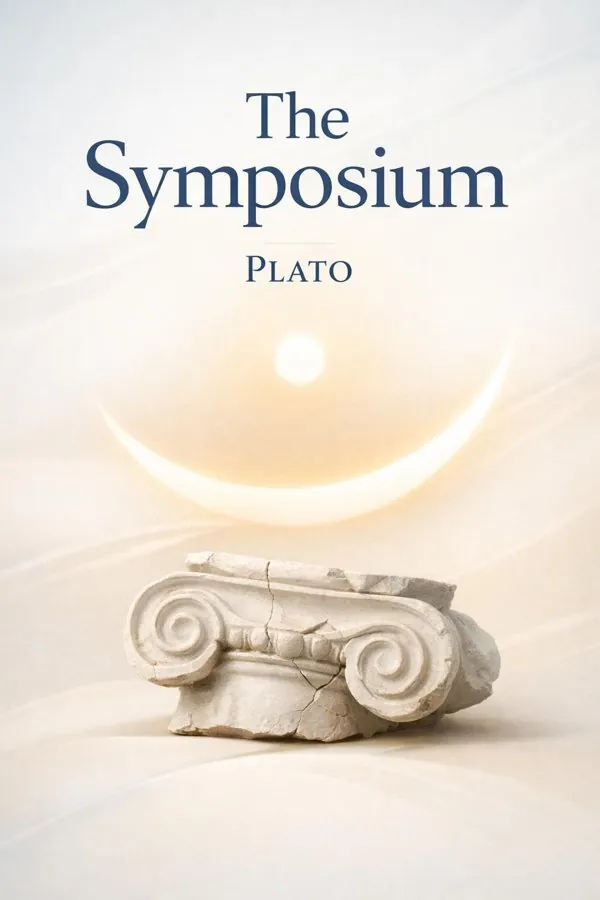
The Symposium
The Symposium is one of Plato’s most celebrated dialogues, written around 385–370 BCE. Set at a banquet in Athens, it presents a series of speeches by Socrates, Aristophanes, Alcibiades, and others, e...

Timaeus
Timaeus is one of Plato’s most influential dialogues, exploring the nature of the physical world and the human soul. In this work, Timaeus, Socrates, Critias, and Hermocrates discuss the creation of t...
Key Insights from Plato
The Search Begins With Definition
Most confusion survives because people talk confidently about things they have never properly defined. That is the opening lesson of Meno. When Meno asks Socrates whether virtue can be taught, Socrates refuses to answer until they first determine what virtue is. This move seems frustrating at first,...
From Meno
Confidence Often Hides Ignorance
The most dangerous kind of ignorance is the kind that feels like knowledge. Meno arrives in the dialogue self-assured and rhetorically skilled, ready to discuss virtue as though the topic were familiar territory. But under Socrates’ questioning, his certainty quickly collapses. This is not merely a ...
From Meno
Can Virtue Really Be Taught?
A practical question can expose an entire philosophy of human excellence. Meno begins by asking whether virtue is teachable, acquired by practice, given by nature, or obtained in some other way. Socrates insists that the question cannot be answered cleanly until virtue itself is understood. Still, t...
From Meno
The Paradox That Blocks Inquiry
One of the most famous moments in Meno begins with a challenge that sounds devastating: how can you search for something if you do not know what it is? If you already know it, inquiry is unnecessary. If you do not know it, how will you recognize it when you find it? This is Meno’s paradox, and it th...
From Meno
Learning As Recollection
Some truths seem to emerge not as if they were newly inserted into the mind, but as if they had been awakened. To answer Meno’s paradox, Socrates introduces the theory of recollection: the soul has encountered truth before, and what we call learning is in some sense remembering. Whether taken litera...
From Meno
True Belief Versus Knowledge
Getting the right answer is not always the same as understanding why it is right. Near the end of Meno, Plato introduces a distinction that has shaped epistemology ever since: true belief can guide action successfully, but knowledge is more stable because it is tied down by an account of the reason ...
From Meno
About Plato
Plato (c. 427–347 BCE) was an ancient Greek philosopher, a student of Socrates, and the teacher of Aristotle. He founded the Academy in Athens, one of the earliest institutions of higher learning in the Western world. His dialogues form the foundation of Western philosophy and continue to influence ...
Read more
Plato (c. 427–347 BCE) was an ancient Greek philosopher, a student of Socrates, and the teacher of Aristotle. He founded the Academy in Athens, one of the earliest institutions of higher learning in the Western world. His dialogues form the foundation of Western philosophy and continue to influence ...
Plato (c. 427–347 BCE) was an ancient Greek philosopher, a student of Socrates, and the teacher of Aristotle. He founded the Academy in Athens, one of the earliest institutions of higher learning in the Western world. His dialogues form the foundation of Western philosophy and continue to influence thought across disciplines.


Frequently Asked Questions
Plato (c. 427–347 BCE) was an ancient Greek philosopher, a student of Socrates, and the teacher of Aristotle.
Read Plato's books in 15 minutes
Get AI-powered summaries with key insights from 10 books by Plato.